1What is hotel reporting software?
Hotel reporting software is a system that transforms operational hotel data into dashboards and structured reports that help managers understand performance. It typically consolidates information from a Property Management System (PMS), Channel Manager, Booking Engine, payment tools, and reservation systems. By analyzing metrics such as occupancy, ADR, RevPAR, booking pace, and channel mix, hotel reporting software enables operators to monitor financial health, identify trends, and make data-driven decisions across revenue management, distribution strategy, and daily hotel operations.
2Why is hotel reporting important for hotels and lodging businesses in the United States?
Hotel reporting is essential because U.S. lodging businesses operate in a competitive and data-driven environment where pricing, distribution, and guest demand change quickly. Reporting provides managers with visibility into revenue performance, booking patterns, operating costs, and channel profitability. This information helps hotels adjust rates, optimize staffing, control OTA reliance, and forecast demand. Without structured reporting, properties often rely on spreadsheets or delayed accounting reports, which slows down decision-making and limits the ability to respond to market shifts.
3Which key performance indicators (KPIs) should hotels track in reporting dashboards?
The most important hotel KPIs include occupancy rate, average daily rate (ADR), revenue per available room (RevPAR), booking lead time, cancellation rate, and channel mix. Many U.S. hotels also monitor total revenue per available room (TRevPAR), average length of stay, booking pace, and revenue by room type. These KPIs help revenue managers and general managers understand both demand and pricing effectiveness. Consistent KPI tracking enables hotels to compare performance across seasons, identify demand patterns, and evaluate distribution strategies.
4How does hotel reporting software integrate with a Property Management System (PMS)?
Hotel reporting software typically integrates directly with the PMS, which serves as the central operational database for reservations, guest profiles, room inventory, and stay activity. When reporting tools are connected to the PMS, data flows automatically into dashboards and analytics modules. This allows hotels to analyze occupancy trends, room revenue, guest segmentation, and operational metrics without exporting data manually. PMS integration ensures reports reflect real-time booking activity and provides a reliable foundation for revenue management and operational planning.
5What is the difference between hotel reporting tools and hospitality business intelligence platforms?
Hotel reporting tools focus on operational dashboards and pre-built hospitality metrics such as occupancy, RevPAR, and channel performance. Hospitality business intelligence platforms are broader analytics systems that combine multiple data sources and allow advanced modeling, forecasting, and custom visualization. Reporting tools are typically easier to implement and designed for daily operational insight, while business intelligence platforms support deeper strategic analysis. Many independent hotels rely primarily on built-in reporting tools before expanding into full BI environments.
6How can hotel reporting support revenue management strategies?
Revenue management depends on accurate and timely data. Reporting tools help hotels analyze booking pace, demand by date, price sensitivity, and channel performance. By comparing occupancy trends and rate performance, revenue managers can adjust pricing strategies, minimum stay requirements, and distribution tactics. Reporting also highlights compression periods and low-demand dates, enabling proactive rate adjustments. When connected to automation or revenue management workflows, reporting becomes a foundation for more precise pricing and demand forecasting.
7Why is channel reporting critical when hotels sell rooms through OTA’s and direct bookings?
Channel reporting reveals how different distribution sources contribute to overall revenue and profitability. U.S. hotels often receive bookings from OTA’s, direct website reservations, corporate contracts, and other partners. Reporting tools compare commission costs, cancellation patterns, average booking value, and lead times across channels. This allows operators to evaluate the real profitability of each source. Without channel reporting, hotels may focus on total revenue while overlooking high acquisition costs or excessive dependence on third-party platforms.
8What metrics should hotels analyze to measure direct booking performance?
Direct booking performance should be evaluated through conversion rates in the booking engine, website traffic sources, abandonment rates, and the share of direct bookings relative to OTA reservations. Hotels should also track booking lead time, average order value, and mobile conversion rates. These metrics help operators understand how effectively their direct channel competes with OTA’s. Monitoring these indicators allows hotels to refine pricing strategies, website usability, and marketing campaigns that drive more profitable direct reservations.
9How frequently should hotel performance reports be reviewed?
Daily reports are essential for operational decisions such as arrivals, occupancy levels, cancellations, and revenue pickup. Weekly reports are commonly used to evaluate booking pace, staffing needs, and distribution performance. Monthly reporting supports financial analysis, owner reporting, and budget tracking. Real-time dashboards are increasingly important in modern hotel software because they allow managers to monitor changes in demand instantly and adjust pricing or operational planning without waiting for scheduled reports.
10Which reports are most useful for independent hotels and small hotel groups?
Independent hotels often rely on a core set of practical reports including daily manager reports, occupancy forecasts, pickup reports, source-of-business analysis, revenue by room type, and outstanding balance reports. These reports provide visibility across reservations, payments, and operational planning without requiring advanced analytics expertise. Small hotel groups also benefit from consolidated performance reports that compare properties, allowing owners and operators to monitor overall portfolio performance while still reviewing individual property results.
11How does hotel reporting help with forecasting and budgeting?
Hotel forecasting relies on historical booking patterns, seasonal trends, and current reservation pace. Reporting systems organize this data into structured views that help managers estimate future occupancy, revenue, and staffing requirements. By comparing historical performance with current demand, hotels can create more accurate budgets and operational plans. Reliable reporting reduces uncertainty in purchasing, marketing, and labor planning, ensuring decisions are supported by measurable performance data rather than assumptions.
12Why is guest segmentation important in hotel reporting?
Guest segmentation divides reservations into meaningful groups such as leisure travelers, corporate guests, groups, OTA bookings, and repeat visitors. Reporting based on segmentation reveals differences in booking behavior, average stay value, and cancellation patterns. This helps hotels tailor marketing campaigns, pricing strategies, and service offerings to each segment. Segmentation also allows revenue managers to identify which guest types generate the most profitable bookings and which channels attract those segments.
13Can hotel reporting improve housekeeping scheduling and labor planning?
Yes. Operational reporting can combine reservation data, arrival and departure patterns, and room status information to estimate daily housekeeping workload. Managers can forecast the number of rooms requiring cleaning, late check-outs, and stayovers. This insight helps schedule staff more efficiently and reduces both understaffing and unnecessary labor costs. For U.S. hotels facing labor shortages or high wage pressure, accurate operational reporting supports better workforce planning while maintaining service quality.
14How should hotels track cancellations, no-shows, and booking pace in reports?
Hotels should monitor cancellations, no-shows, and booking pace separately but within the same reporting framework. Cancellations indicate potential revenue loss, while no-shows affect room availability and payment recovery. Booking pace measures how quickly future dates are filling compared to historical patterns. When analyzed together, these metrics help hotels anticipate occupancy fluctuations, adjust pricing strategies, and evaluate the reliability of different booking channels, especially during high-demand events or seasonal shifts.
15Which software integrations are most important for accurate hotel reporting?
Accurate reporting requires integration between multiple hotel technology systems. The most important connections include the Property Management System, Channel Manager, Booking Engine, payment gateways, accounting software, and revenue management tools. Additional integrations may include point-of-sale systems, housekeeping software, and guest messaging platforms. When these systems share data automatically, reporting dashboards reflect the full operational picture of the property and eliminate the need for manual data reconciliation across departments.
16How complex is the implementation of hotel reporting software?
Implementing hotel reporting software usually involves connecting data sources, mapping room types and rate plans, and validating historical booking data. The complexity depends on the hotel’s existing technology environment and data consistency. Properties with a well-structured PMS setup often implement reporting quickly, while hotels with inconsistent data or multiple disconnected systems require more preparation. Staff training is also essential so managers understand how to interpret dashboards and translate insights into operational actions.
17What data preparation steps are required before launching hotel reporting tools?
Before launching reporting tools, hotels should standardize rate plans, room categories, and source-of-booking codes across all systems. Duplicate guest profiles, inconsistent channel names, and missing historical reservation data can distort reports. Hotels should also verify tax and fee classifications so revenue reports accurately reflect financial performance. Proper data preparation ensures that analytics dashboards produce reliable comparisons across time periods, room types, and distribution channels.
18How much does hotel reporting software typically cost in the U.S. market?
The cost of hotel reporting software varies depending on whether analytics is included in a PMS platform or offered as a standalone product. Pricing may depend on room count, number of properties, and the level of advanced analytics provided. Additional costs can include implementation, training, or integration with accounting and revenue management tools. Hotels typically evaluate cost not only by subscription price but also by operational efficiency, time savings, and improved revenue visibility.
19What payment security standards affect hotel reporting systems in the United States?
Payment security standards such as PCI DSS influence how hotels handle transaction data and financial reporting. Systems that process or transmit credit card information must comply with strict security practices designed to protect cardholder data. Reporting tools therefore focus on payment status, authorization results, and reconciliation summaries rather than exposing sensitive card information. Secure reporting practices help hotels maintain compliance while still providing financial visibility for accounting and management teams.
20How do U.S. price transparency rules affect hotel reporting and pricing analysis?
Recent regulatory attention to transparent pricing means hotels must clearly display total prices and mandatory fees during the booking process. Reporting tools should therefore distinguish between room revenue, resort fees, service charges, and taxes. This separation allows revenue managers to analyze true room performance while ensuring marketing and distribution teams present accurate pricing to guests. Proper reporting helps maintain compliance and ensures financial data aligns with publicly displayed prices.
21Why does website accessibility matter when analyzing booking performance data?
Accessibility directly influences booking conversion and guest experience. In the United States, hotels must ensure that digital booking experiences are accessible to users with disabilities under accessibility standards associated with public accommodations. Reporting tools can reveal where guests abandon the booking process or experience friction. By combining accessibility improvements with performance analytics, hotels can reduce lost reservations while improving compliance and inclusivity across their digital booking journey.
22What information do hotel owners and investors expect in performance reports?
Owners and investors usually expect concise summaries of occupancy, ADR, RevPAR, channel mix, total revenue, operating expenses, and forecast performance. They also look for comparisons against budget, previous year performance, and market benchmarks. Clear reporting allows ownership groups to evaluate whether the property is meeting financial targets and operating efficiently. Consistent reporting structures are particularly important for multi-property owners who compare results across several hotels.
23When should hotels create custom reports instead of relying on standard dashboards?
Custom reports become valuable when a property has unique operational structures or revenue streams that standard dashboards cannot capture effectively. Examples include mixed-use hospitality properties, extended-stay hotels, or properties with significant ancillary revenue from events or food service. Custom reporting allows managers to analyze performance in ways that align with their specific business model, ensuring that analytics reflect real operational priorities rather than generic industry averages.
24What common mistakes do hotels make when using reporting tools?
One common mistake is tracking too many metrics without focusing on actionable insights. Another issue is relying on inaccurate or incomplete data due to inconsistent system configuration. Hotels may also misinterpret topline revenue without considering channel commissions, cancellations, or mandatory fees. Effective reporting requires clear metric definitions, consistent data governance, and alignment across departments so that managers interpret performance indicators in the same way.
25How does RoomRaccoon support hotel reporting and performance analysis?
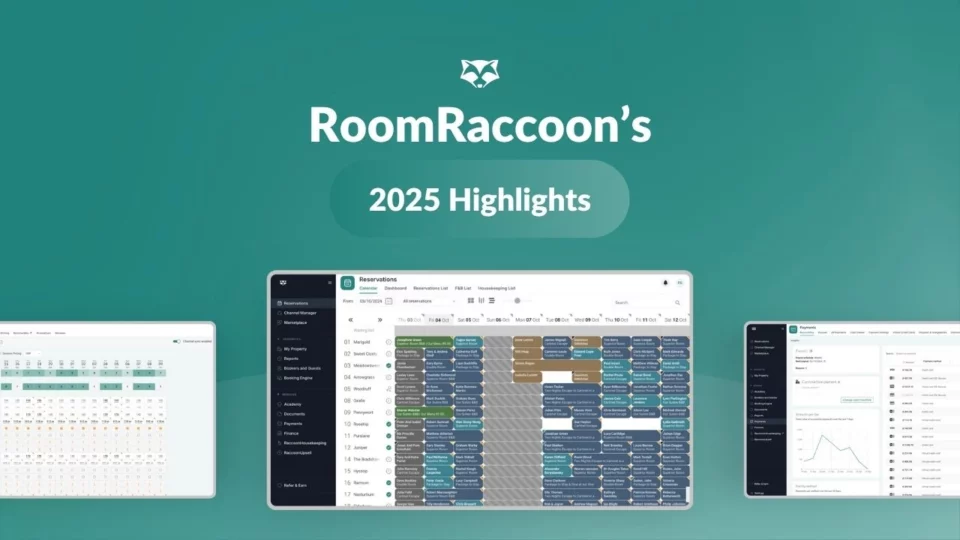
RoomRaccoon provides hotel reporting within an integrated platform that combines a Property Management System, Channel Manager, Booking Engine, and revenue tools. Because operational and distribution data are centralized, reporting dashboards can display occupancy, revenue, booking sources, and performance trends in real time. This unified structure reduces manual data consolidation and helps hoteliers monitor KPIs, analyze channel performance, and make operational decisions using a single connected system.