

















20 Ways to Increase Direct Bookings for Your Hotel
Share this post

What Is a Direct Booking?
A direct booking is a reservation made by a guest directly with the hotel, without the involvement of a third-party intermediary like an Online Travel Agent (OTA). This typically happens through the hotel’s own booking engine on its website, via email, social media, phone, or walk-in.
According to RoomRaccoon’s 2024 Europe Booking Channel Trends Report, direct bookings now account for over 50% of all hotel reservations across Europe, making them the leading source of bookings in four out of six regions studied. In markets like BENELUX and DACH, direct channels even outperformed Booking.com, which is the dominant OTA in the region.
This growing trend reflects how important it is for independent hotels to invest in direct booking strategies. Tools like optimized booking engines, metasearch listings (Google Hotel Ads), and secure payment options are essential for converting lookers into bookers and reducing reliance on costly OTA commissions.
What Is the Difference Between Direct and OTA Bookings?
Understanding the differences between OTA and direct bookings is key to shaping a profitable distribution strategy. Here’s a side-by-side comparison to help you see where each channel adds value—and where direct bookings give you the upper hand.
| Comparison | Direct Bookings | OTA Bookings |
|---|---|---|
| Source | Hotel’s website, phone, email, or walk-in | Third-party platforms like Booking.com, Expedia, Airbnb |
| Commission Fees | None or very low (Google Hotel Ads pay-per-stay) | Typically 12%–18% per booking |
| Guest Data Ownership | Full access to guest contact and behavior data | Limited access, often restricted by OTA terms |
| Profit Margin | Higher, as non or fewer commissions are deducted from owned digital marketing | Lower, due to OTA fees |
| Cash Flow | Payment goes directly to the hotel—faster and more predictable | OTA payments often delayed and sometimes held until check-out |
| Customization | Can offer exclusive perks, rate plans, and upsells | Restricted to OTA display rules and structures |
| Branding | Guest interacts directly with your hotel brand | OTA branding dominates the booking journey |
| Loyalty Opportunities | Easier to build guest loyalty through direct contact | Difficult to establish repeat relationships |
| Booking Flexibility | More control over policies and rate plans | OTAs often enforce standard policies |
| Marketing Control | Full control over messaging and upselling | Limited ability to promote directly on OTA profiles |
| Conversion Tools | Can use pop-ups, payment links, expiring RFPs | Limited to OTA’s native features |
Bonus: Work with OTAs, Not for Them – Regain Control of Payments
Finding the Balance: Direct vs. OTA Bookings
Your distribution strategy is the engine behind your revenue. It’s how you sell rooms smarter by reaching the right guests on the right channels. In this episode of Diary of a Hotelier, Nadja shares five practical tips she used to build the perfect booking channel mix at The Bliss, where direct bookings made up 50% of all reservations. Watch the video below or read the full story.
Top Booking Channels for an Optimal Distribution Strategy
The most successful hoteliers don’t just list rooms. They build distribution strategies that drive both visibility and profitability.
Third party channels like OTAs are essential allies. They bring global reach, attract travelers who’ve never heard of your property, and spend billions on marketing to do it. When they fill your calendar, their commission is justified.
But relying solely on these channels? That’s where many go wrong.
An optimal strategy blends OTAs with direct bookings and niche platforms. That’s how you reduce cost per acquisition, build guest loyalty, and keep control of your margins.

RoomRaccoon Channel Report
Online Travel Agencies (OTAs)
OTAs like Booking.com, Expedia, and Airbnb remain key traffic drivers, especially for independent hotels without massive marketing budgets. They offer:
- Global reach with no upfront cost
- Access to demand in new or seasonal markets
- Built-in trust and frictionless booking experiences
But every booking comes at a cost. Most OTAs charge 15 to 20% in commission, and they own the guest relationship.
So, use OTAs to fill gaps and reach new eyes. Just don’t let them own your entire calendar.
Metasearch Engines
Metasearch platforms like Google Hotel Ads, Trivago, and Tripadvisor compare prices across multiple channels and send traffic straight to your booking engine.
That means more direct bookings, lower commissions, and full control of the guest experience.
Unlike OTAs, metasearch ads don’t take a cut of your revenue. You pay per click, not per booking. This gives you the power to control costs and measure ROI more precisely.
It’s also where many high-intent guests start their journey. They’ve picked a destination, they’re comparing prices, and they’re ready to book.
If you’re not visible here, your competitors are.
Distribution Marketplaces
Distribution marketplaces like HyperGuest, Gimmonix, and RoomCloud are reshaping how hotels connect with B2B travel sellers.
Unlike traditional GDS platforms, these modern marketplaces give hotels direct access to travel agents, OTAs, corporate travel programs, and wholesalers, all through a single integration.
Own Website Hotel Bookings
Your website is your most profitable sales channel — full stop.
Every booking that comes through your site means zero (or less) commission, full guest data ownership, and the opportunity to build direct relationships. It’s where your brand, your story, and your pricing are fully in your control.
But just because you have a beautiful website and a high-converting booking engine doesn’t mean direct bookings will magically appear. You still need to drive traffic, and that means investing in visibility.
- Use metasearch engines like Google Hotel Ads
- Run targeted digital marketing campaigns
- Leverage the OTA billboard effect — guests discover you on OTAs and then book directly after researching your brand
How to Increase Direct Bookings for Hotels: 20 Proven Strategies That Actually Work
1. Use a commission-free booking engine
Want to stop handing 15–18% of your revenue to OTAs? Then start with a commission-free booking engine. It’s the backbone of your direct booking strategy and your profit margin.
Unlike third-party platforms, a commission-free booking engine lets you:
- Capture bookings directly from your website and social channels
- Keep 100% of the revenue, every time
- Offer exclusive perks that OTAs can’t match (like early check-in or unique add-ons)
- Maintain control over your guest data, pricing, and upsell opportunities
It’s a simple shift that improves profitability and strengthens your direct booking strategy.
2. Own your visibility on Google
Start where guests start: search engines. 78% of travelers research hotels via Google before booking, so your Google Business Profile and SEO game need to be strong.
- Optimize your Google Business Profile (GBP): Hotels with complete GBP listings see up to 70% more direct bookings.
- Dominate hotel-specific SEO: Build dedicated landing pages for your hotel packages, must-see tourist hotspots, and time-sensitive local events. Blogging about nearby festivals, conferences, and seasonal attractions doesn’t just bring in traffic; it targets travelers who are already planning their visit.
- Run Google Hotel Ads (GHA): Properties using GHA report a 17% spike in direct bookings.
3. Make your website your top-performing salesperson
Your booking engine needs to convert, not just exist.
- Clear CTAs: Every key page on your site should feature a bold, unmistakable “Book Now” button. Don’t stop at the homepage. Add booking CTAs to individual room pages as well. Linking each button directly to the booking widget for that specific room removes friction and drives faster conversions.
- Mobile-first: Over 60% of bookings now happen on mobile. If your site isn’t responsive, you’re losing money.
- Fast, simple checkout: Reduce steps to increase conversions by up to 20%.
4. Make direct booking feel like VIP access
As Nadja, RoomRaccoon’s CPO, put it in her “Diary of a Hotelier” series: “Guests won’t go out of their way to book direct unless you give them a reason.” And she’s right. Your website needs to scream, “book here and get more.”
- Best Price Guarantee: 62% of travelers will book direct if they’re promised the lowest rate.
- Exclusive perks and packages: Breakfast, late check-out, or room upgrades can increase direct bookings by 41%.
- Visible promos: Use pop-ups, banners, and customizable booking proposals (RFPs) to highlight these offers.
5. Shift OTA guests to your site
Stop renting your guests from OTAs. Win them back.
- Email marketing: Post-stay emails offering perks for booking direct boost repeat direct bookings by 20%.
- OTA messaging hacks: Mention direct perks in confirmation emails or OTA messages. If they see benefits, 24% of guests will switch channels.
- Retargeting ads: 72% of travelers who see a retargeting ad book within a week. Re-engage OTA browsers across Google, Facebook, and Instagram.
6. Capture more direct group bookings
Most booking engines are designed for solo travellers or couples. They fall apart when it comes to more complex scenarios — think group bookings, multi-room stays, or guests with specific requests like adjoining rooms or staggered arrival dates. For independent hotels, especially those hosting families, weddings, retreats, or business groups, the ability to handle complexity directly on your site is a game-changer.
Here’s how to make your booking engine work harder:
- Enable multi-room bookings in one transaction: Let guests book two or more rooms at once, with ease.
- Add flexible guest and date inputs: Make it easy to adjust the number of guests per room, or choose different check-in/check-out dates per room.
- Allow special requests: Include fields for room proximity, extra beds, or accessibility needs.
- Offer bundled pricing or group rates: Incentivise direct bookings for group organisers with packages that include meals, parking, or event space.
- Use room allotments with private booking links: Reserve a block of rooms and give guests a direct booking link with pre-set rates and availability — ideal for weddings, retreats, or events.
- Automate responses or RFPs: If your hotel PMS supports it, offer an instant quote or proposal tool for event and group bookings.
- Enable negotiated rates for travel partners: Give corporate clients and travel agents access to exclusive rates via a private login or booker code, so they can book direct without involving your team each time.
7. Promote your booking engine where your guests hang out
79% of travelers use social media for trip inspiration. Meet them there.
- Link in bios: Put your booking engine front and center on Instagram, Facebook, and TikTok.
- UGC and testimonials: Hotels sharing user-generated content see 35% higher engagement.
- Behind-the-scenes content: Build trust and drive FOMO.
8. Use dynamic pricing
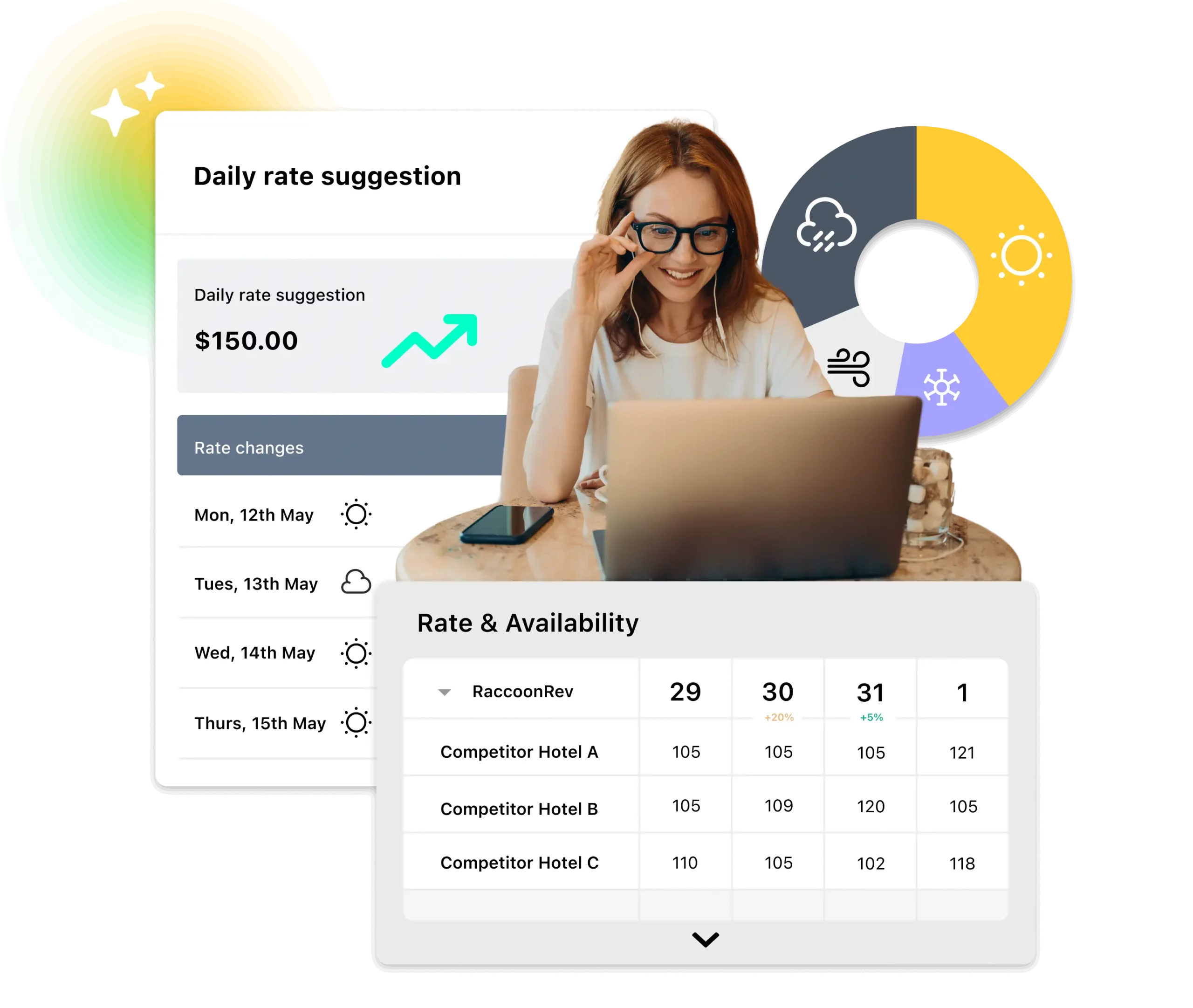
Flat, unchanging rates may feel safe, but they often lead to missed opportunities, especially for direct bookings. Today’s travelers are used to seeing dynamic pricing across flights, rideshares, and yes, hotels. What matters isn’t how often your rates change, but whether those changes reflect real-time demand.
With AI tools like RaccoonRev Plus, hoteliers can use data-driven insights to adjust prices based on factors like compset activity, weather forecasts, and booking trends. This makes it easier to offer fair, competitive rates directly on your website, where you’re trying to drive more bookings.
By aligning your pricing with what’s actually happening in the market, you help guests feel confident booking direct. And that confidence translates into higher conversion rates, better yield, and more control over your distribution strategy.
9. Offer flexible payment options at checkout
OTAs have perfected seamless payment experiences, and guests now expect the same when booking directly.
To increase hotel direct bookings and reduce OTA dependency, your checkout needs to be just as intuitive and accommodating.
Here’s how to increase reservations via your hotel website by optimizing payments:
- Support digital wallets: Let guests pay with Apple Pay, Google Pay, or PayPal.
- Add buy-now-pay-later options: Cater to guests who prefer instalments or deferred payments.
- Localise currency display: Show prices in the guest’s local currency to build trust.
- Optimize for mobile checkout: Ensure payment is smooth, fast, and secure on any device.
- Offer multiple methods: Credit card, debit, bank transfer — the more options, the fewer drop-offs.
10. Offer saved cards and 3D Secure payments
Offering multiple methods is a great way to increase bookings on your hotel website, but guests also need to feel safe and secure to convert.
Guests are more likely to book directly when they trust the checkout process. 3D Secure adds a layer of protection, while saved cards make repeat bookings fast and frictionless. It’s a simple way to build trust and boost loyalty.
11. Showcase standout room photos to drive conversions
High-quality images are one of the fastest ways to increase hotel direct bookings. Guests shop with their eyes, and your own website needs to visually compete with OTAs. With RoomRaccoon, you can upload over 25 images per room — more than enough to show every angle, feature, and upgrade.
Highlight different room types, bathroom finishes, amenities, and views. The more clarity you give guests, the more confidence they’ll have to book directly.
12. Highlight your Best Available Rate with price comparison
One of the most effective ways to increase direct bookings for your hotel is to clearly show guests they’re getting your Best Available Rate (BAR). A simple price comparison tool on your website — showing your direct rate vs OTAs — builds trust and reinforces the value of booking direct.
13. Use guest messaging apps to convert interest into bookings
Answering the same questions over and over? Guest messaging platforms automate up to 90% of guest interactions, handling FAQs, booking queries, and upsell opportunities 24/7. These tools engage visitors via live chat on your website and social media, instantly directing them to your booking engine. The result? Fewer drop-offs, faster conversions, and more direct bookings without adding pressure to your front desk.
14. Run referral programs
A hotel referral program is a marketing strategy that rewards past guests, partners, or even local businesses for recommending your property to others. It’s a low-cost, high-trust way to drive direct bookings because independent hotels don’t have widespread brand recognition like big chains do. A personal recommendation from a happy guest carries far more weight than an ad.
You don’t need a massive CRM to run a referral program. Many PMS and booking engines support several tactics with tools like promo code generation, tracking links, and automated emails to support this strategy.
15. Showcase what makes you different
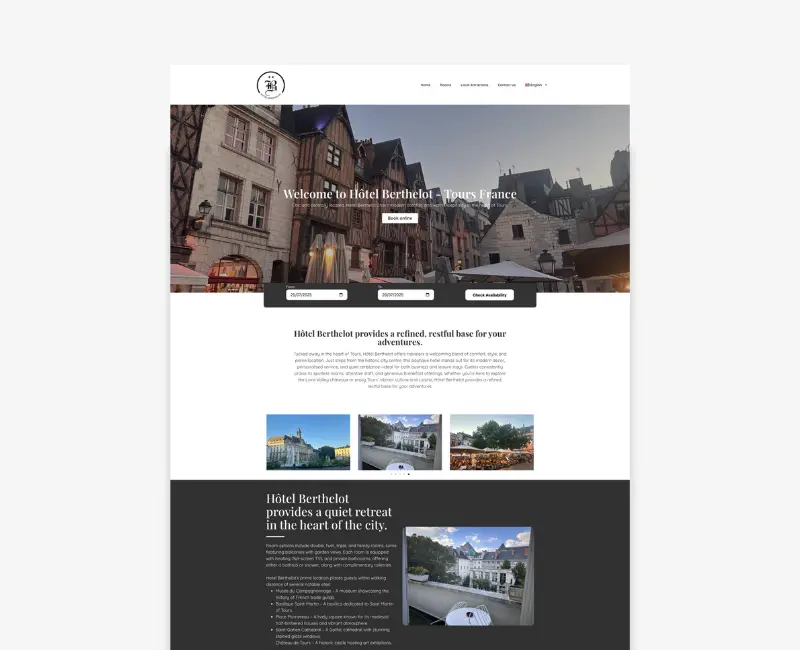
OTAs make you look like every other listing. Your hotel website should scream “unique” and bring your brand to life. When your site captures your personality, tells your story, and creates an emotional connection, guests stay longer and they’re far more likely to book direct.
- Highlight your story: Owner-led? Historic building? Pet paradise? Say it.
- Use video headers and 4D tours: Give guests a preview that sells the experience, such as drone flyovers, walk-throughs, and cinematic footage that captures your property’s essence.
- Add testimonials by persona: Business travelers, families, or couples.
Learn more about building a memorable hotel brand.
16. Use Google Hotels to shift bookings from OTAs to direct
Google Hotels is one of the most powerful tools to drive direct hotel bookings, especially if your booking engine connects to Google Hotel Ads (GHA). With the right setup, your direct rates appear right alongside OTAs in search results. That gives guests a clear, trustworthy path to book directly on your website.
It’s a straightforward way to increase reservations through your own site while reducing your reliance on third parties.
17. Offer a variety of rate plans
Offering a variety of rate plans is a powerful revenue management strategy that helps independent hoteliers capture more direct bookings and maximize revenue across guest segments. Different travelers book in different ways: some want flexibility, others prioritize savings. By offering a mix of rate types, you meet them where they are.
Here’s how it works:
- Flexible rates appeal to cautious bookers who value free cancellation.
- Non-refundable rates secure early revenue and reduce cancellations.
- Advance purchase deals encourage early planning and help forecast demand.
- Value-packed packages (like breakfast included or spa access) boost spend and create a stronger direct booking incentive.
Pro tip: Make sure each rate plan is clearly labeled and benefits are easy to compare. Confused guests don’t book, they bounce.
18. Leverage digital marketing to drive direct bookings
Digital marketing helps you reach travelers where they’re searching, scrolling, and planning. But to turn clicks into bookings, your campaigns need more than just visibility; they need tracking.
Run paid campaigns on platforms like Google Ads and Meta (Facebook and Instagram) to promote exclusive direct rates and seasonal offers. Then make sure your booking engine supports tracking pixels and UTM parameters, so you can:
-
- Measure which campaigns lead to bookings
- Understand your return on ad spend (ROAS)
- Retarget users who showed interest but didn’t book
- Optimize future campaigns based on real performance
Without this visibility, you’re flying blind. A booking engine with built-in support for Google Tag Manager or Meta Pixel makes it easy to connect your marketing efforts to actual revenue.
19. Use a “Book Direct and Get % Off” Incentive
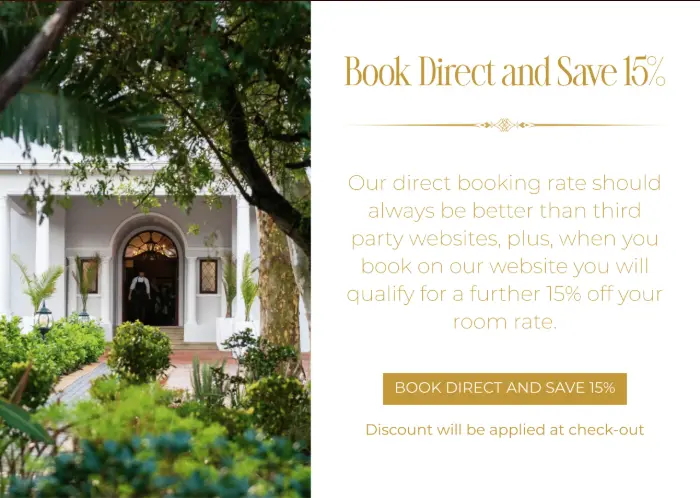
A “Book direct and get % off” banner or pop-up on your hotel website is one of the simplest and most effective ways to drive direct bookings.
Placing this message prominently on your homepage and high-traffic landing pages immediately signals value to potential guests. It highlights a clear advantage over OTAs, appeals to price-sensitive travelers, and encourages them to book through your site. For best results, make sure the banner is mobile-friendly, visually prominent, and links straight to your booking engine with no extra steps.
20. Use an automatic RFP to capture guest enquiries
An automatic Request for Proposal (RFP) lets you respond to guest enquiries with a provisional booking that includes a secure payment link and an expiration time. Instead of waiting on emails or juggling back-and-forth messages, you can generate a clear offer with pricing, availability, and conditions—all in one step.
The guest receives a summary of the proposal along with a link to confirm and pay. If the payment isn’t completed within the set window, the booking expires automatically, and the inventory is released. It’s a smart way to streamline group or special requests, reduce manual work, and increase the chances of securing direct revenue.
Case Study: Casa Shelly

Hotelier: Chris Pettersson, Owner
Property: Casa Shelly
Location: Vejer de la Frontera, Spain
Challenge
Chris needed a hotel management system (HMS) that would prioritize direct bookings and deliver a smooth, end-to-end guest experience from the property website through to check-in.
Solution
Casa Shelly adopted RoomRaccoon’s all-in-one HMS, which includes a powerful booking engine. This tool:
- Optimized the property’s online presence through meta-search visibility
- Streamlined the direct booking journey via the website
Results
- 43% of total reservations now come from direct bookings
- Over 50% of guests check in online
- Zero overbookings thanks to RoomRaccoon’s channel manager
Hotelier Quote
“It simplifies my daily tasks, saves me time, and allows me to focus on what’s most important, which is making my guests feel right at home here at Casa Shelly.”
— Chris Pettersson
When you’ve got the right software in place, putting these strategies into action becomes second nature. At RoomRaccoon, every hotelier is paired with a dedicated Success Manager who checks in regularly to help you drive more results. More bookings. More revenue. Less reliance on OTAs.
Because helping ambitious independent hoteliers grow their direct bookings? That’s our specialty.
Follow us


Nicky. M
Nicky is RoomRaccoon's Senior Content Manager, combining a love for travel with a practical approach to improving hotel performance through tech and insightful tips. Join her journey where travel, hospitality, and technology meet.


Subscribe to our newsletter for more on the latest hospitality & RoomRaccoon updates delivered straight to your inbox!