1What is hotel housekeeping software and how is it used in modern hotel operations?
Hotel housekeeping software is a digital tool that manages cleaning workflows, room status updates, inspections, and maintenance coordination inside a hotel operation. In modern US hospitality environments it typically connects to a Property Management System (PMS) so housekeeping teams receive automatic task assignments based on check-ins, checkouts, and stayovers. By replacing paper boards and manual coordination, the software allows hotel managers, supervisors, and attendants to track room readiness in real time and operate with greater accuracy, accountability, and operational efficiency.
2How does housekeeping software integrate with a Property Management System (PMS)?
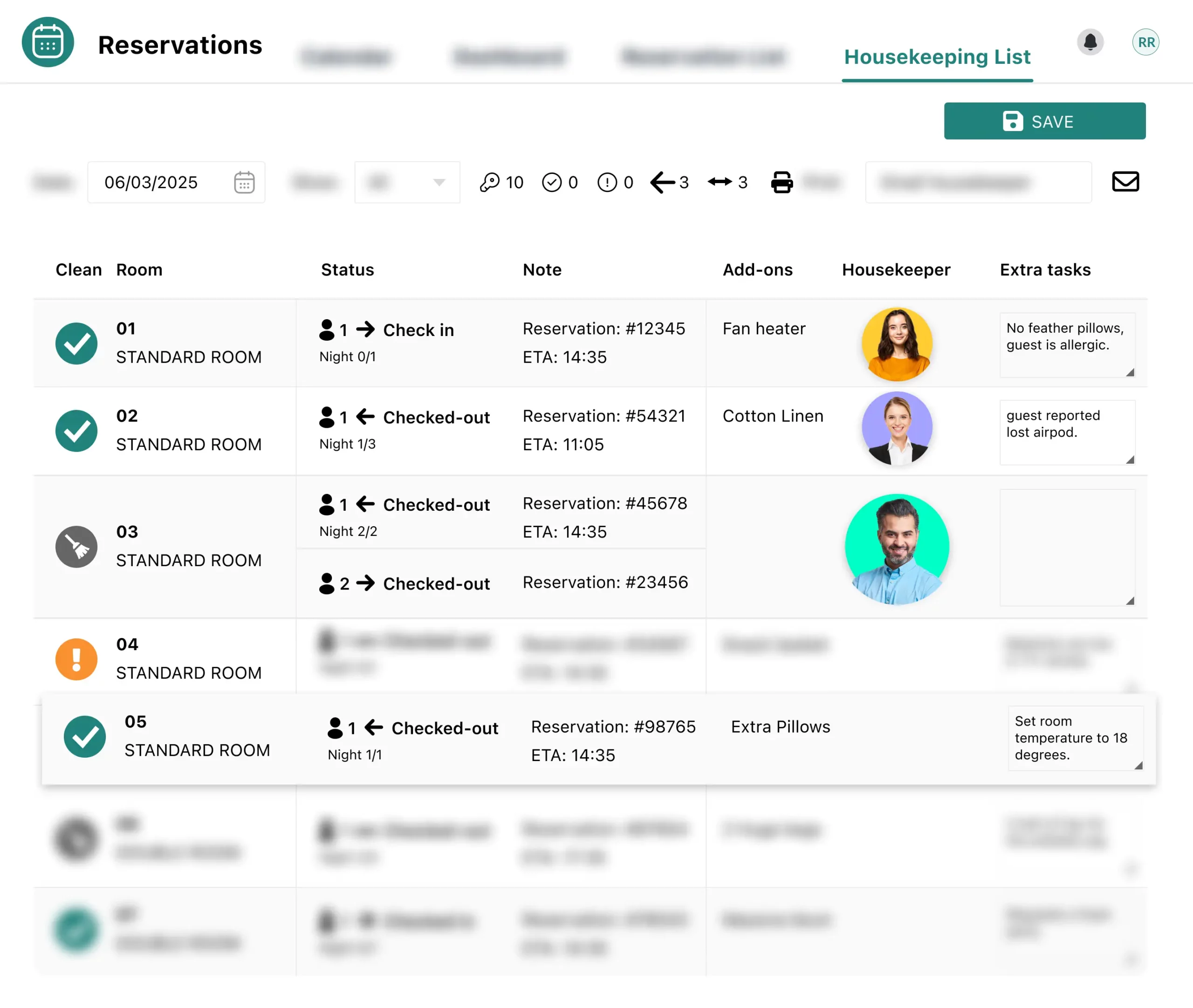
Housekeeping software typically connects directly to the Property Management System (PMS), which stores reservation data, guest stays, and room assignments. When a guest checks out, extends a stay, or changes rooms, the PMS updates housekeeping tasks automatically. This integration allows room status to synchronize instantly between front desk and housekeeping teams. In US hotels this real-time connection reduces communication errors, prevents premature room assignments, and ensures that operational staff prioritize cleaning based on actual arrivals and departures.
3Why are US hotels replacing manual housekeeping boards with digital housekeeping systems?
Digital housekeeping systems replace whiteboards, paper lists, and radio communication with centralized task management and real-time visibility. In the US hospitality market, where staffing pressure and rapid guest turnover are common, this shift improves operational control. Managers can track cleaning progress, assign inspections, document maintenance issues, and analyze productivity across shifts. By digitizing workflows, hotels reduce miscommunication, accelerate room readiness, and gain clearer operational oversight across departments including housekeeping, front desk, and maintenance.
4What is the difference between housekeeping software and a full hotel management platform?
Housekeeping software focuses specifically on room cleaning workflows, inspections, maintenance coordination, and staff task management. A full hotel management platform includes broader operational components such as the Property Management System (PMS), Channel Manager, Booking Engine, payment processing, reporting, and revenue management tools. In many US hotels the housekeeping module functions as part of an integrated cloud hotelsoftware ecosystem, allowing room status, reservations, and distribution data to interact seamlessly across operational departments.
5Which types of accommodation businesses benefit most from housekeeping software?
Housekeeping software is valuable for independent hotels, boutique properties, resorts, extended-stay hotels, inns, serviced apartments, and vacation rental operators. In the US market the greatest operational benefit typically appears in properties with frequent same-day turnovers, large room inventories, or distributed housekeeping teams. Any accommodation provider managing multiple floors, buildings, or room categories can benefit from automated task assignment, mobile communication, and real-time operational visibility that helps coordinate housekeeping with front desk operations and guest arrivals.
6What core features should hotels look for in housekeeping management software?
Key features typically include real-time room status tracking, automated task assignments, mobile access for housekeeping staff, supervisor inspection tools, maintenance issue reporting, and operational dashboards. In the US hospitality environment it is also valuable when housekeeping systems integrate with a PMS, Channel Manager, and Booking Engine so room availability aligns with reservations. Reporting tools, automation rules, and staff accountability tracking help hotel operators understand workload patterns and improve operational planning across departments.
7How does real-time room status improve front desk operations?
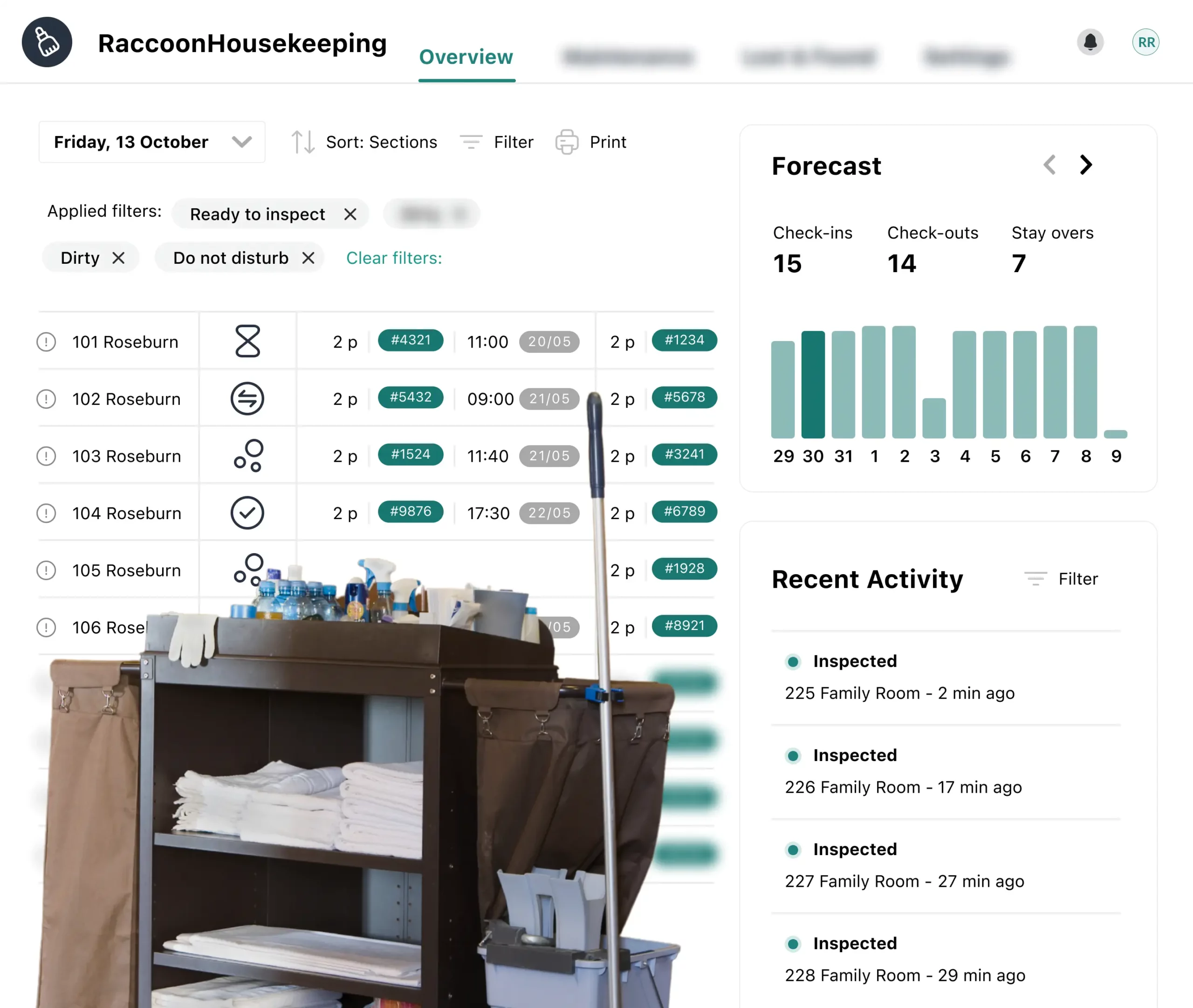
Real-time room status allows front desk staff to see instantly whether rooms are clean, dirty, inspected, out of order, or currently being serviced. In busy US hotels this visibility prevents front desk agents from assigning rooms that are not actually ready. It also helps prioritize cleaning for incoming arrivals, early check-ins, and VIP guests. When housekeeping updates room progress through mobile devices, front desk teams can respond quickly to guest requests while maintaining accurate room availability information.
8Can housekeeping software help reduce guest wait times at check-in?
Yes. Guest wait times often occur when rooms are not cleaned or inspected quickly enough before arrivals. Housekeeping software improves coordination between front desk and housekeeping by prioritizing departure rooms and updating progress instantly. In US hotels that experience high arrival volumes during afternoon check-in windows, this coordination helps reduce lobby congestion and delays. By accelerating room turnover and improving communication, hotels can provide a smoother check-in experience and improve guest satisfaction.
9How does housekeeping software support maintenance reporting and facility management?
Housekeeping staff frequently discover maintenance issues while cleaning rooms, such as plumbing problems, broken fixtures, HVAC failures, or damaged furniture. Housekeeping software allows attendants or supervisors to log these issues instantly from mobile devices. The information can then be routed to maintenance teams with clear timestamps and room references. In US hotels this digital reporting process reduces lost requests, improves response times, and ensures rooms are repaired quickly before being returned to available inventory.
10What are automated cleaning rules in hotel housekeeping systems?
Automated cleaning rules are system-defined instructions that trigger housekeeping tasks based on reservation activity or operational logic. For example, departure rooms may receive highest priority cleaning, while stayover rooms receive service every second day depending on hotel policy. In the US market automation helps properties maintain consistent service standards while reducing manual planning. These rules allow housekeeping teams to scale operations efficiently during fluctuating occupancy levels, group checkouts, or large arrival waves.
11How does mobile housekeeping software improve staff productivity?
Mobile housekeeping software enables attendants and supervisors to receive assignments, update room status, report maintenance issues, and complete inspections directly from smartphones or tablets. Because housekeeping staff rarely work from desks, mobile access improves communication speed and eliminates unnecessary travel to supervisor stations. In US hotels this technology helps staff manage large properties more efficiently while giving managers immediate visibility into task completion, room progress, and operational bottlenecks across floors or buildings.
12Can housekeeping software improve labor efficiency in hotels?
Housekeeping software can improve labor efficiency by distributing cleaning tasks according to workload, room type, and operational priority rather than static assignments. In US hospitality operations, where labor costs and staffing shortages remain major concerns, this data-driven task allocation helps managers deploy staff more effectively. Supervisors can rebalance assignments during the day, track productivity metrics, and ensure that departure rooms are prioritized, which helps hotels maintain service quality without increasing staffing levels.
13How does housekeeping software support inspections and quality control?
Inspection workflows allow supervisors to verify that rooms meet cleanliness and operational standards before they are marked ready for guests. Digital inspection tools record inspection results, comments, and approval timestamps. In US hotels this documentation supports quality control, staff training, and accountability. If recurring issues appear in certain room categories or cleaning tasks, managers can identify patterns through inspection reports and adjust procedures, improving long-term operational consistency and guest satisfaction.
14Which operational metrics should hotels track in housekeeping reports?
Important housekeeping metrics include average room turnaround time, rooms cleaned per attendant, inspection pass rates, maintenance issues reported, and out-of-order room duration. US hotel managers also analyze occupancy-based workload patterns and cleaning productivity across shifts or departments. When housekeeping data integrates with the PMS and revenue management reporting, operators can better understand how booking demand affects operational capacity and where process improvements or automation may improve efficiency.
15How does housekeeping software influence revenue management and room availability?
Housekeeping operations directly affect how quickly rooms become sellable inventory. If rooms remain unclean or uninspected, hotels may temporarily lose availability even when demand exists. When housekeeping software synchronizes with PMS data, room readiness becomes visible to revenue managers and front desk teams. In US hospitality markets where OTA bookings and last-minute reservations are common, faster room turnover can improve inventory utilization and allow hotels to capture additional revenue opportunities.
16Can housekeeping software help hotels manage OTA-driven booking demand?
Online travel agencies (OTA’s) frequently generate last-minute bookings that place pressure on hotel operations. When OTA reservations flow into the PMS and automatically trigger housekeeping tasks, hotels can react faster to sudden demand changes. In the US travel market this integration is particularly useful during weekends, conferences, and seasonal travel peaks. Coordinated housekeeping workflows ensure rooms are cleaned quickly enough to maintain accurate inventory across OTA channels and direct booking systems.
17What does housekeeping software typically cost for US hotels?
Housekeeping software costs vary depending on property size, feature complexity, integrations, and whether the tool is part of a larger hotelsoftware platform. Many solutions use a subscription model based on room count or property size. In the US market monthly software fees are common, sometimes combined with onboarding or training costs. Hotels generally evaluate the investment based on labor efficiency gains, faster room availability, improved operational oversight, and integration with PMS and distribution systems.
18How long does it take to implement housekeeping software in a hotel?
Implementation timelines depend on property size, existing operational processes, and system integrations. Smaller US hotels may complete deployment relatively quickly, while larger properties or multi-property groups require more configuration. Successful implementation usually involves defining room status categories, configuring cleaning rules, connecting the PMS, and training staff on mobile workflows. When preparation is thorough, housekeeping software can begin improving coordination and operational transparency soon after launch.
19What should hotels prepare before implementing housekeeping software?
Before adopting housekeeping software, hotels should document current cleaning workflows, inspection standards, and communication processes between departments. In the US hospitality environment it is also important to evaluate Wi-Fi coverage, mobile device policies, and staff training needs. Hotels planning integrations with PMS, Channel Manager, or Booking Engine systems should verify data synchronization expectations. Preparing these operational details helps ensure the software aligns with real hotel processes rather than forcing disruptive changes.
20What data security and privacy considerations apply to housekeeping software in the US?
Hotels using cloudsoftware should review vendor security standards, access permissions, and data storage policies. Although housekeeping modules typically handle operational data rather than payment information, they often connect to broader hotelsoftware environments that store guest details. US operators should confirm compliance with common cybersecurity practices, internal data governance policies, and user access controls. Clear permission structures ensure that operational staff can perform tasks without unnecessary exposure to sensitive guest information.
21How does housekeeping software relate to labor compliance and workplace regulations in the US?
Housekeeping software does not replace legal compliance processes, but it can support operational transparency around task assignments and work timing. US hotels must follow federal and state labor rules related to wage tracking, overtime, breaks, and workplace safety. Digital task logs and timestamped activity records can help document housekeeping workflows. These records assist managers in monitoring workload distribution and operational fairness while maintaining accurate documentation for internal review or regulatory compliance.
22What are the advantages of cloud-based housekeeping software compared with on-premise systems?
Cloud-based housekeeping software is hosted online and accessed through browsers or mobile devices rather than local hotel servers. In the US hospitality sector this approach simplifies software updates, remote access, and multi-property management. Cloud systems also integrate more easily with PMS platforms, Channel Managers, Booking Engines, and analytics tools. Because maintenance and infrastructure are managed by the software provider, hotels often require fewer internal IT resources to operate the system effectively.
23Can independent hotels manage housekeeping software without a dedicated IT department?
Yes. Many independent US hotels adopt cloud hotelsoftware specifically because it requires minimal technical infrastructure. Housekeeping systems are typically configured through user dashboards where managers assign tasks, monitor room status, and review operational reports. Vendors usually provide onboarding support and training resources. Once implemented, daily use focuses on operational workflows rather than technical maintenance, allowing smaller hotel teams to benefit from digital housekeeping management without maintaining complex IT systems.
24Which integrations are most important for housekeeping software?
The most critical integration is usually with the Property Management System (PMS), because reservations, checkouts, and room assignments determine housekeeping priorities. Additional integrations with Channel Manager platforms and Booking Engine systems help ensure accurate room availability across distribution channels. In the US hotel market, linking housekeeping operations with reservation data allows staff to respond quickly to booking demand while maintaining operational coordination between housekeeping, front desk, and revenue management teams.
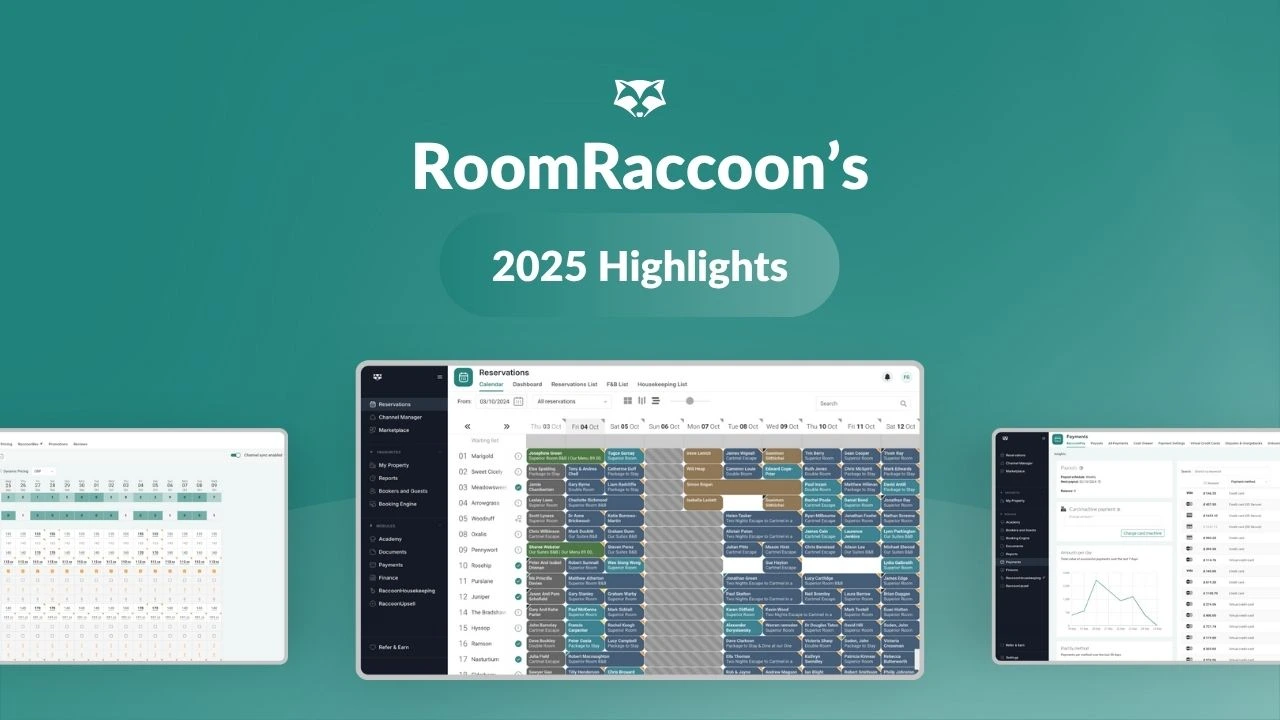
25Why might a hotel choose RoomRaccoon for housekeeping management?
RoomRaccoon provides housekeeping functionality within a unified cloud hotelsoftware platform that combines PMS capabilities, Channel Manager distribution, and Booking Engine management. Because housekeeping tasks synchronize with reservation data and operational workflows, hotel teams can coordinate cleaning, inspections, and room readiness from a single system. For US hoteliers seeking an integrated approach to hotel operations rather than multiple disconnected tools, this type of centralized platform can simplify daily management and improve operational visibility.