1What is a hotel website builder and how does it fit into modern hotel software?
A hotel website builder is specialized cloud software that allows hotels and accommodation providers to create, manage, and update their own booking-ready website without traditional web development. Unlike generic website platforms, it is designed to connect directly with hotel technology such as a PMS, Booking Engine, Channel Manager, and payment systems. This integration ensures room availability, rates, and reservations remain synchronized while enabling the website to function as a direct booking channel that supports automation, operational efficiency, and consistent guest data across the hotel’s digital infrastructure.
2Why is a direct-booking hotel website important for independent hotels in the US?
A direct-booking hotel website is the primary digital sales channel owned and controlled by the hotel. In the US hospitality market, where online travel agencies (OTAs) dominate discovery, a well-structured website helps hotels capture reservations directly rather than paying commissions. It also allows hoteliers to present their brand, room inventory, policies, and amenities clearly. By integrating with PMS and booking systems, the website becomes a conversion tool that supports revenue control, guest data ownership, and a healthier channel mix.
3How does a hotel website builder differ from a general website platform?
A hotel website builder differs from a general website platform because it is designed specifically for lodging operations and reservation conversion. While generic website tools focus on content publishing, hotel-specific builders include features such as room type displays, integrated Booking Engine functionality, real-time availability, rate plan presentation, and connections with PMS and Channel Manager systems. This allows the website to function as part of the hotel’s operational technology stack rather than as a standalone marketing site disconnected from inventory management.
4How does a hotel website connect to a Booking Engine?
A Booking Engine is the reservation interface that allows guests to search availability, view rates, and complete reservations directly on the hotel’s website. When the website is connected to a Booking Engine, availability and pricing are pulled from the PMS in real time, ensuring accurate inventory display. This integration allows guests to complete bookings without leaving the website while automatically transferring reservation data to operational systems, reducing manual work and improving accuracy across the hotel’s reservation workflow.
5What role does a Property Management System (PMS) play in a hotel website ecosystem?
A Property Management System, or PMS, is the operational hub that manages reservations, room assignments, guest profiles, and daily hotel operations. Within a website ecosystem, the PMS ensures that reservations made on the website automatically update room availability and guest records. This connection prevents overbookings, maintains inventory accuracy, and centralizes reservation data. When integrated properly, the PMS allows the hotel website, Booking Engine, and Channel Manager to operate as one synchronized system supporting automated hospitality operations.
6Why is Channel Manager integration essential for a hotel website?
A Channel Manager distributes rates and availability across multiple distribution platforms, including OTAs, metasearch channels, and the hotel’s own website. When the hotel website is connected to the Channel Manager, the same inventory and pricing logic used across OTAs is reflected in direct bookings. This synchronization reduces the risk of overbookings and rate discrepancies while allowing hotels to manage all distribution channels from a single interface. Integration also supports consistent revenue strategies across direct and third-party sales channels.
7How can a hotel website help reduce reliance on OTAs?
A hotel website helps reduce reliance on OTAs by providing travelers with a trusted direct booking path. When a property website clearly presents room types, amenities, location information, policies, and transparent pricing, guests are more likely to book directly. Integration with Booking Engines and payment systems allows the entire reservation process to occur on the site. This approach enables hotels to maintain OTA visibility for marketing exposure while gradually increasing the share of commission-free direct bookings.
8What core features should a modern hotel website builder include?
A modern hotel website builder should include mobile-responsive design, integrated booking functionality, secure hosting, search-engine-optimized page structures, and seamless connections with PMS, Channel Manager, and payment providers. Additional capabilities often include analytics integration, customizable templates, automated rate display, and multi-language support. These features ensure the website functions not only as a marketing channel but also as an operational component within the hotel’s broader cloud-based hospitality technology ecosystem.
9Why is mobile performance critical for hotel websites in the US market?
Mobile performance is critical because a large share of hotel searches and travel planning occurs on smartphones. Travelers frequently compare properties, amenities, and prices while on the move, especially for short stays or last-minute reservations. A mobile-optimized hotel website ensures that pages load quickly, navigation remains clear, and the booking flow works smoothly on small screens. Poor mobile performance can reduce direct booking conversions and push travelers toward OTA platforms with faster booking experiences.
10How does search engine optimization (SEO) influence hotel website visibility?
Search engine optimization for hotels focuses on improving a website’s ability to appear in search results when travelers research destinations, accommodations, or local attractions. Effective hotel SEO includes optimized page titles, local landing pages, structured content about rooms and amenities, and fast page performance. When combined with clear booking functionality and local relevance, SEO helps the hotel website capture organic search demand, increasing direct traffic and improving the likelihood that travelers discover the property before visiting OTA listings.
11What content should every hotel website include to improve direct bookings?
A high-performing hotel website typically includes detailed room descriptions, clear rate policies, amenities, location information, and answers to common booking questions. Additional content such as nearby attractions, transportation guidance, parking information, and check-in policies can reduce uncertainty during the booking process. Transparent information helps travelers feel confident booking directly rather than switching to OTAs for verification. Well-structured content also supports search visibility by aligning the website with the types of queries travelers commonly use.
12How much does a hotel website builder typically cost?
The cost of a hotel website builder depends on the level of integration, design customization, and operational functionality required. Expenses may include software subscription fees, setup or migration costs, payment gateway configuration, and ongoing content management. The most meaningful cost consideration is total operational value rather than the lowest subscription price. A website tightly integrated with hotel systems can reduce manual work, improve direct booking conversions, and provide measurable returns through increased direct revenue.
13How long does it usually take to launch a hotel website?
Launching a hotel website typically requires coordination between design, content preparation, and system integration. Hotels must prepare room descriptions, policies, photography, and operational data before connecting the website to reservation systems. Testing the Booking Engine, payment processing, and PMS synchronization is also essential. Depending on complexity, a website launch can range from a few weeks for a small independent property to several months for larger operations requiring multiple integrations and extensive content preparation.
14What information should a hotel prepare before building a website?
Before launching a hotel website, operators should prepare accurate room inventory data, rate plans, cancellation policies, check-in procedures, and payment rules. They should also gather professional photography, property descriptions, and accessibility details. Technical preparation includes selecting the PMS, Channel Manager, and Booking Engine that will integrate with the website. Having this information organized ensures that the website launch proceeds efficiently and that guests receive consistent, accurate information throughout the reservation process.
15What accessibility requirements apply to hotel websites in the United States?
Hotel websites in the United States are expected to meet accessibility standards that ensure individuals with disabilities can access online booking systems and property information. Accessibility principles generally include readable page structures, keyboard navigation compatibility, descriptive alternative text for images, and booking interfaces that work with assistive technologies. These practices help hotels meet accessibility expectations while ensuring that all guests, including those with disabilities, can independently research accommodations and complete reservations online.
16What accessibility information should hotels provide during online booking?
Accessible online booking requires hotels to clearly identify accessible room types and describe the accessibility features available within those rooms. Guests should be able to review these details before making a reservation and book the room type directly online without needing to call the property. Clear accessibility descriptions, accurate room availability, and transparent booking processes help travelers with disabilities make informed decisions and ensure compliance with accessibility expectations in the hospitality industry.
17How should hotels handle transparent pricing on their websites?
Transparent pricing means clearly presenting the full cost of a stay before a guest completes the booking process. This includes room rates, taxes, resort fees, parking charges, and any mandatory surcharges. Clear pricing presentation helps travelers understand the total cost and prevents confusion during checkout. For hotels, transparent pricing practices improve trust, reduce booking abandonment, and align the website experience with evolving consumer expectations around honest pricing in online travel transactions.
18What payment security considerations are important for hotel websites?
Payment security is essential when guests submit credit card information during online reservations. Hotel websites should use secure payment gateways, encrypted connections, and PCI-compliant payment infrastructure. These safeguards ensure that cardholder data is processed securely and reduce the risk of fraud or data breaches. Secure payment architecture also simplifies compliance responsibilities for hotels by allowing specialized payment providers to handle sensitive transaction processing within the reservation workflow.
19What privacy considerations should hotels address on their websites?
Hotel websites collect personal information through reservation forms, analytics tools, and marketing integrations. Hotels should clearly communicate what data is collected, how it is used, and how guests can request access or deletion of their information. Privacy transparency builds trust with travelers and supports compliance with consumer privacy expectations. Hotels operating in the United States must also consider evolving state privacy laws and ensure their booking and marketing practices align with responsible data management.
20Which integrations are most important for a hotel website?
The most important integrations typically include the Property Management System, Booking Engine, Channel Manager, payment gateway, analytics tools, and guest communication systems. These integrations allow reservations, availability, and guest information to flow automatically between systems. When properly connected, the website becomes a central part of the hotel’s operational technology environment, enabling automation, accurate inventory management, and efficient guest communication across the booking lifecycle.
21Can a hotel website builder support multi-property hotel groups?
Yes, hotel website builders can support multi-property operations by providing shared templates, centralized content management, and property-specific booking functionality. Hotel groups often need brand consistency across multiple locations while allowing each property to display its own room types, rates, and local information. A multi-property website structure helps maintain brand identity while ensuring that reservations are routed correctly to each property’s PMS and inventory system.
22How does local search influence hotel website performance?
Local search plays a major role in hotel discovery because travelers frequently search by destination, neighborhood, or nearby landmarks. A hotel website optimized for local search includes location-specific content, nearby attractions, and information about transportation or local amenities. By aligning website content with geographic search intent, hotels can improve visibility when travelers research accommodations within a particular city or area, increasing the chances of attracting direct bookings.
23How can analytics help hotels improve website performance?
Analytics tools help hotels understand how travelers interact with their website, including which pages attract visitors, how guests navigate the booking process, and where users abandon reservations. By analyzing this data, hoteliers can identify improvements such as simplifying booking steps, clarifying policies, or enhancing room descriptions. Data-driven insights allow hotels to continuously optimize the website experience and strengthen direct booking performance over time.
24When should a hotel consider redesigning its website?
A hotel should consider redesigning its website when it no longer supports modern booking behavior or operational integration. Signs include outdated design, poor mobile usability, lack of integration with PMS or Booking Engine systems, slow performance, or incomplete property information. Redesigning the website can improve search visibility, streamline reservations, and align the digital experience with current traveler expectations and hospitality technology standards.
25How does RoomRaccoon support hotel websites and direct bookings?
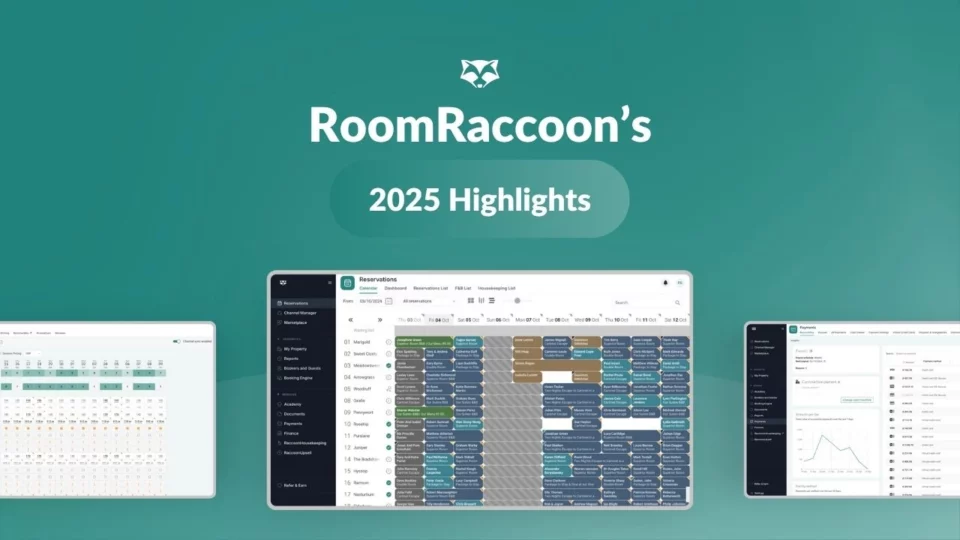
RoomRaccoon provides a cloud-based platform that combines a hotel website builder with core hospitality technology such as a Property Management System, Channel Manager, and Booking Engine. By connecting the website directly to operational systems, the platform allows availability, pricing, and reservations to remain synchronized while enabling hotels to accept direct bookings online. This integrated approach helps accommodation providers manage distribution, automate reservations, and maintain consistent data across their hospitality technology environment.