1What is automated upselling in hotel operations?
Automated upselling is a hospitality technology process in which hotel software automatically offers guests paid upgrades or additional services during the booking journey or before arrival. These offers are generated using reservation data stored in a property management system (PMS). Instead of relying on front-desk staff to suggest upgrades manually, the system presents relevant options such as room upgrades, breakfast packages, or late checkout. For U.S. hotels, automated upselling helps increase revenue per guest while keeping operations efficient and consistent.
2How does automated upselling work inside a hotel property management system (PMS)?
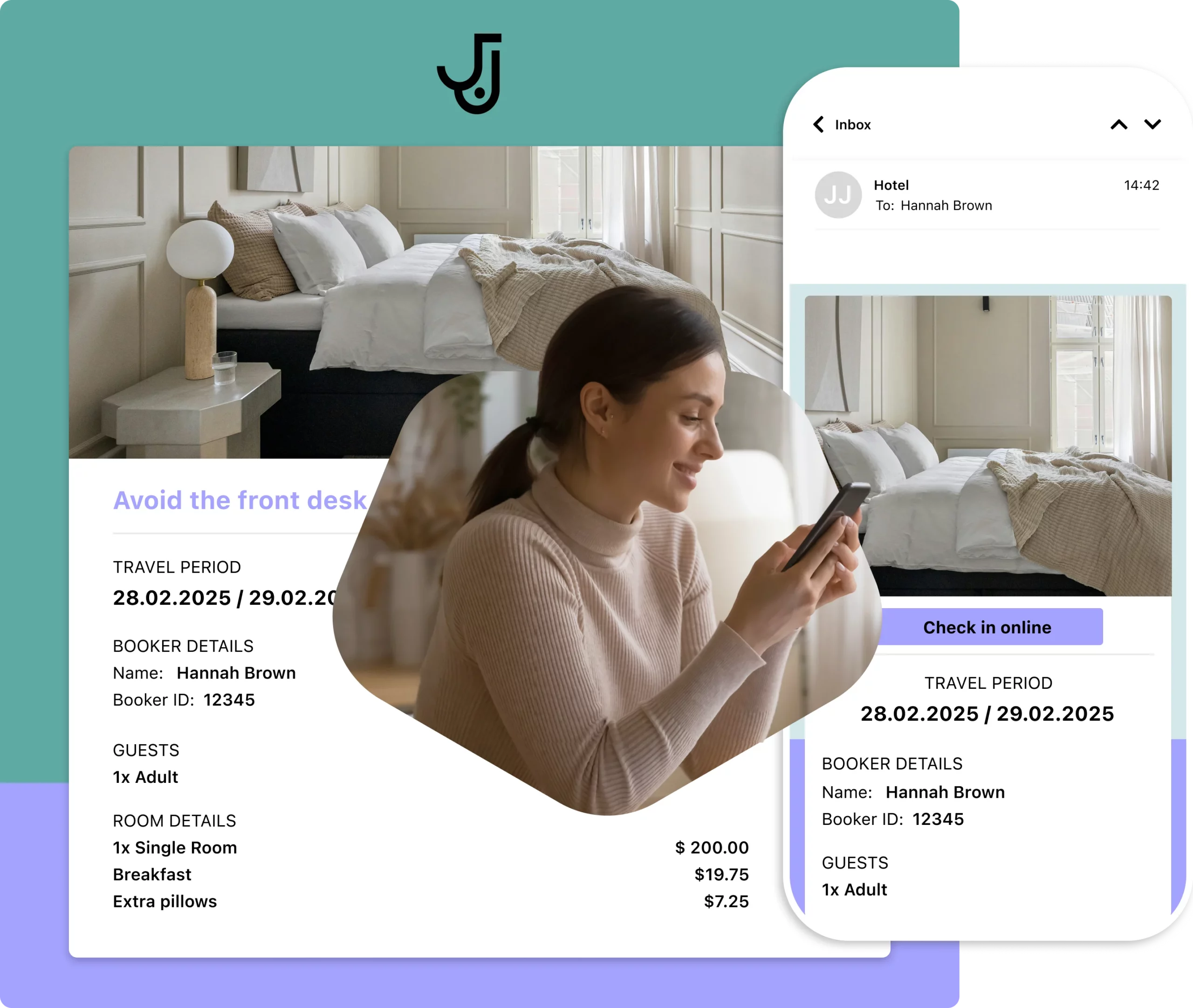
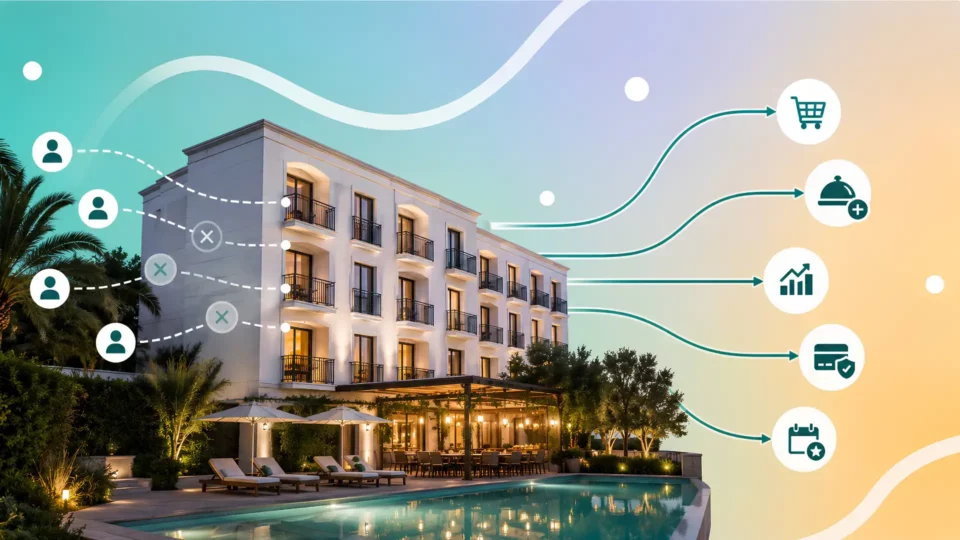
Within a PMS, automated upselling works by analyzing reservation details such as stay dates, room category, availability, and rate plans. The system then triggers contextual offers during key guest touchpoints like post-booking confirmations, pre-arrival emails, or online check-in. When a guest accepts an offer, the PMS automatically updates the reservation, inventory, and billing. In U.S. hotel operations, this integration ensures that upgrades and add-ons are fulfilled operationally while keeping financial reporting, housekeeping coordination, and guest profiles synchronized.
3Why do hotels in the United States implement automated upselling instead of manual upselling?
Automated upselling ensures consistency and scale in hotel sales operations. Manual upselling depends on staff timing, training, and confidence, which can lead to inconsistent results. Automation allows every guest to receive relevant offers regardless of arrival time or staffing levels. For U.S. hotels facing labor shortages and high operational costs, automated upselling helps increase ancillary revenue without requiring additional staff. It also improves conversion rates by presenting offers digitally at moments when guests are already engaged with their reservation.
4What types of hotel products and services can be sold through automated upselling?
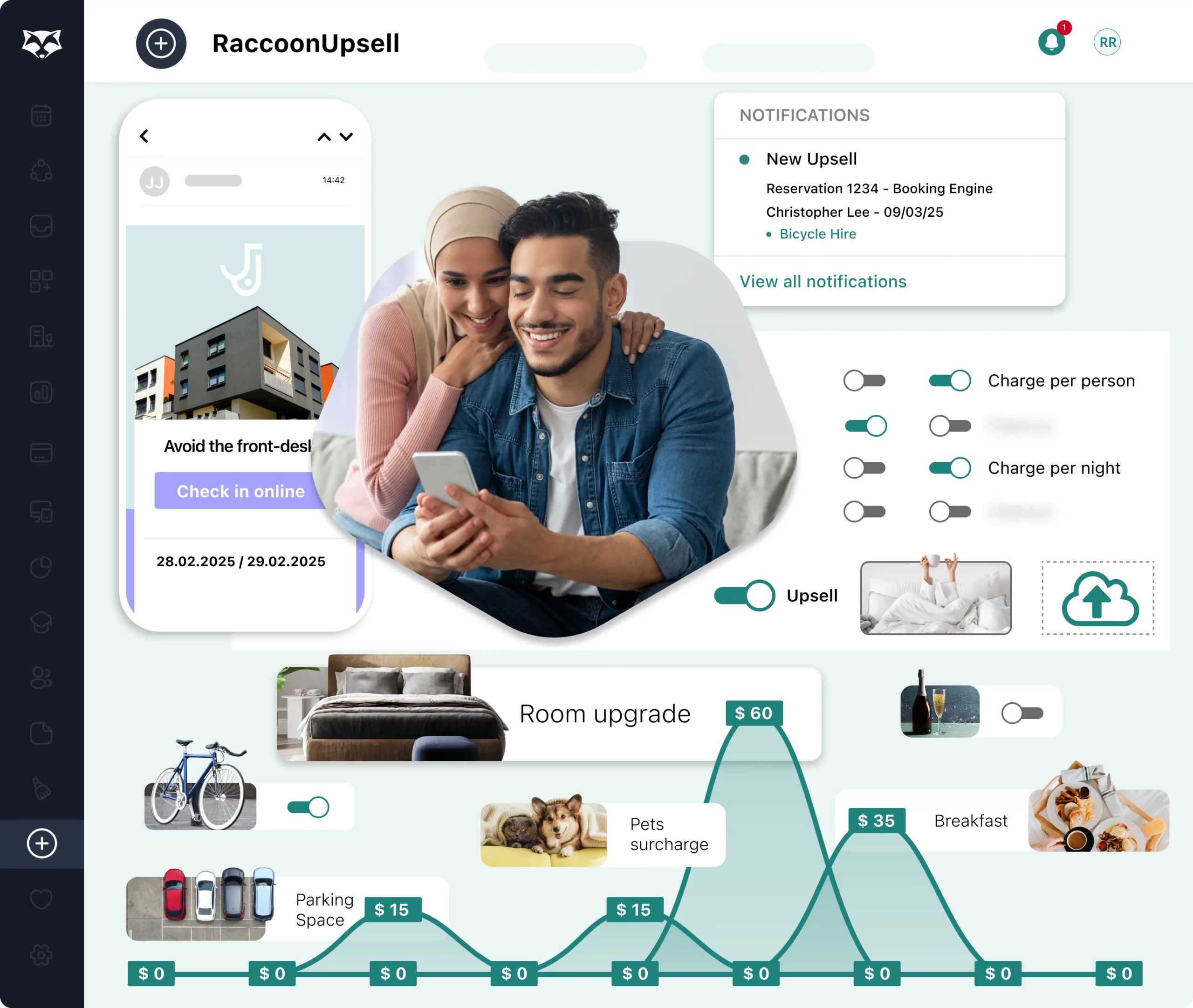
Automated upselling typically includes room category upgrades and stay-related extras that can be easily fulfilled operationally. Examples include early check-in, late checkout, breakfast, parking, spa access, pet fees, premium views, airport transfers, and local experiences. In many U.S. properties, these offers are displayed through a digital guest portal or online check-in interface connected to hotel software. The most effective upsell products are those with clear value for guests and minimal operational complexity for staff.
5When should hotels present automated upsell offers to maximize conversion?
Timing is critical for successful automated upselling. The most effective moment is usually between booking confirmation and arrival, when guests are planning their stay and are open to enhancements. Offers may also appear during online check-in or inside a guest self-service portal. In the U.S. hospitality market, pre-arrival communication is particularly effective because travelers often finalize plans such as parking, early arrival, or dining shortly before the trip.
6What is the difference between automated upselling and cross-selling in hospitality technology?
Upselling refers to encouraging guests to purchase a higher-value version of their existing choice, such as upgrading to a larger room category or a better view. Cross-selling refers to offering complementary services like breakfast, parking, or spa access. In hotel software, both techniques often appear in the same automated workflow. The difference is strategic: upselling increases the value of the original reservation, while cross-selling expands the range of services attached to the stay.
7How does automated upselling connect with a hotel booking engine?
A booking engine captures direct reservations on the hotel’s website, while automated upselling increases the value of those reservations after they are made. Once a booking enters the PMS through the booking engine, the system can trigger upgrade and add-on offers based on availability and rate rules. For U.S. hotels, this connection strengthens direct revenue strategies by maximizing the value of commission-free bookings before the guest even arrives.
8Does a channel manager influence automated upselling opportunities?
Yes, a channel manager plays an indirect but important role in automated upselling. By synchronizing room availability and pricing across OTAs and direct channels, it ensures the PMS has accurate inventory data. This allows the system to safely offer upgrades without overselling room categories. In the U.S. hospitality environment, where distribution often spans multiple OTAs and direct channels, reliable channel management supports more accurate and scalable upsell strategies.
9Can hotels upsell guests who booked through OTAs such as Expedia or Booking platforms?
Yes, hotels can upsell OTA guests after the reservation is received by the PMS. Once the booking data enters the system through channel integrations, the hotel can present upgrades and add-ons through pre-arrival communication or digital check-in. In the U.S. market, where OTA bookings represent a large portion of demand for many independent hotels, automated upselling provides an opportunity to increase revenue even when the original booking came from a third-party platform.
10How does automated upselling support hotel revenue management strategies?
Automated upselling complements revenue management by increasing total revenue per reservation without changing base room rates. Revenue managers can use it to monetize unsold room categories, sell late check-out inventory, or attach premium services to existing reservations. When connected to a PMS and pricing rules, upselling becomes part of a broader revenue optimization strategy alongside rate management, distribution strategy, and occupancy forecasting.
11How personalized should automated upsell offers be for hotel guests?
Effective automated upselling relies on contextual personalization rather than complex data profiling. The system can use reservation details such as room type, stay duration, occupancy, travel purpose, and arrival time to generate relevant offers. For example, a short urban business stay may respond to early check-in or parking, while a weekend leisure stay may respond to upgrades or packages. In U.S. hotels, personalization should focus on improving relevance while maintaining operational simplicity.
12What data is required to implement automated upselling successfully?
Hotels typically need structured room categories, defined add-on services, pricing rules, and availability controls stored in their PMS. Reservation data from booking engines, OTAs, and channel manager integrations also plays a key role. Additional configuration may include payment settings, eligibility rules, and timing triggers for offers. Successful implementation depends less on large datasets and more on clean operational logic that aligns with housekeeping schedules, inventory management, and guest communication workflows.
13How much does automated upselling software usually cost for hotels?
The cost of automated upselling varies depending on how it is delivered within hotel software. Some platforms include it as a built-in PMS feature, while others charge separate subscription fees or transaction commissions on accepted upgrades. U.S. hotels should evaluate not only monthly subscription costs but also implementation effort, payment processing fees, and potential revenue uplift. The financial value typically depends on increased ancillary revenue and improved operational efficiency.
14How can a hotel measure the return on investment (ROI) of automated upselling?
Hotels usually measure ROI by tracking metrics such as upgrade conversion rate, ancillary revenue per reservation, average daily revenue per guest, and total revenue per available room. Reporting within the PMS should also show which add-ons perform best and which booking channels produce the highest upsell conversions. For U.S. hotel operators, ROI analysis often includes both financial gains and operational benefits such as reduced front-desk workload.
15Does automated upselling improve or harm the guest experience?
Automated upselling can enhance the guest experience when offers are relevant, optional, and clearly priced. Many travelers appreciate the ability to customize their stay digitally without contacting the front desk. However, excessive or poorly timed offers may feel intrusive. In U.S. hospitality practice, the most effective approach is to present a small number of useful options that genuinely improve convenience, comfort, or flexibility during the stay.
16Which payment methods should U.S. hotels support for automated upsell purchases?
Hotels in the United States typically support credit cards, debit cards, and digital wallets for upsell purchases. Because many upsells occur before arrival through online check-in or guest portals, payment processing must support secure remote transactions. Integration between payment gateways and hotel software ensures that charges are automatically attached to reservations and financial records. Secure payment handling is essential for both operational efficiency and guest trust.
17What U.S. regulations affect digital upselling in hotel booking and check-in flows?
Hotels operating in the United States must ensure pricing transparency when presenting paid upgrades and extras. Federal and state consumer protection laws prohibit deceptive pricing practices and require clear disclosure of mandatory fees. Automated upselling systems should clearly distinguish optional services from required charges. Compliance also includes secure payment handling and accurate reservation records, which are typically managed within the hotel’s PMS and financial reporting systems.
18How does accessibility compliance affect automated hotel upselling interfaces?
Digital hotel services such as booking engines, online check-in, and guest portals should follow accessibility principles that allow travelers with disabilities to complete reservations and select services independently. This includes clear navigation, readable text, and accessible digital interfaces. In the U.S., accessibility expectations are commonly guided by ADA principles. For automated upselling, this means that upgrade options and add-ons should be presented in the same accessible formats as the rest of the reservation experience.
19What security considerations apply to automated upselling systems?
Security is crucial because automated upselling often involves processing payments before arrival. Hotel software should follow recognized payment security practices, including encrypted transactions and tokenized payment data. Systems must also protect reservation and guest profile information within the PMS. For U.S. hotels, secure handling of payment credentials and guest data reduces fraud risk, prevents operational disruptions, and ensures reliable financial reconciliation across booking channels.
20How difficult is it for hotels to implement automated upselling technology?
Implementation complexity depends largely on the hotel’s existing technology stack. Properties using cloud-based hotel software with integrated PMS, booking engine, and channel manager typically implement automated upselling faster than those relying on separate systems. Configuration usually involves defining upgrades, add-ons, pricing rules, and timing triggers. For U.S. hotels, cloud-based deployment often reduces IT overhead while enabling faster staff adoption and easier updates.
21How should hotel staff work alongside automated upselling systems?
Automated upselling shifts the role of hotel staff from active selling to operational management. Front-desk and reservations teams monitor accepted upgrades, confirm availability, and ensure services are delivered correctly. Housekeeping and operations teams may receive notifications when room upgrades or late checkout requests are accepted. In U.S. hospitality environments where staffing can fluctuate, automation allows teams to maintain service quality without depending heavily on manual sales conversations.
22How does automated upselling influence hotel room inventory management?
Automated upselling interacts closely with room inventory logic stored in the PMS. Upgrade offers must reflect real-time availability so that higher-category rooms are only offered when operationally feasible. When a guest accepts an upgrade, the reservation record updates immediately, ensuring housekeeping and front-desk staff have accurate information. In U.S. hotel operations, this integration helps monetize unsold premium rooms while maintaining control over room allocation and service delivery.
23Is automated upselling useful for small independent hotels or only for large hotel groups?
Automated upselling benefits properties of all sizes. Independent hotels and boutique accommodations often gain significant value because automation compensates for limited staff resources. Larger hotel groups may use it to standardize revenue practices across multiple properties. In the U.S. hospitality market, both segments increasingly rely on cloud-based hotel software to manage distribution, guest communication, and ancillary revenue opportunities efficiently.
24What common mistakes should hotels avoid when implementing automated upselling?
Hotels sometimes create ineffective upselling strategies by offering too many extras, setting unclear pricing, or presenting offers at inconvenient moments. Another mistake is failing to connect upsell logic to real room availability or operational capacity. Automated systems should also maintain clear pricing transparency and avoid confusing fee structures. Successful implementation focuses on relevance, simplicity, and operational alignment between reservations, housekeeping, and revenue management.
25How can a U.S. hotel evaluate RoomRaccoon for automated upselling capabilities?
A U.S. hotel evaluating RoomRaccoon should examine how its automated upselling functionality integrates with the platform’s PMS, booking engine, channel manager, and payment processing tools. The key consideration is whether upgrades and add-ons can be configured easily and automatically reflected in reservations, inventory, and billing. Because RoomRaccoon is designed as a cloud-based hotel management platform, automated upselling operates as part of a broader system that connects guest communication, distribution management, and operational workflows.