

















What is a Hotel Channel Manager And How Does it Work?
Share this post

A hotel channel manager is a software tool or platform that helps hoteliers and property managers efficiently manage their online distribution across various online travel agencies (OTAs), global distribution systems (GDS), metasearch engines (Google), and other online booking platforms.
The primary purpose of a hotel channel manager for independent hotels is to streamline and automate the process of updating room availability, rates, and other important information across multiple channels in real-time.
This helps hotels optimize their revenue by ensuring accurate and up-to-date information is available to potential guests on different booking platforms.
You can do this all from one dashboard, easily updating rates and availability without juggling multiple platforms. In short, a hotel channel manager makes selling hotel rooms and special packages straightforward and efficient.
How exactly does a hotel channel manager work?
Most hotels list their inventory on at least three channels. That’s great for visibility, but it also means more complexity behind the scenes. Managing availability and pricing manually across multiple platforms? That’s a recipe for errors, double bookings, and missed revenue opportunities.
That’s where a channel manager steps in.
A channel manager is the software that connects your Property Management System (PMS) with all your sales channels. The best ones work in real time. When a guest books a room on any platform—whether it’s your website, Booking.com, or Airbnb—the channel manager automatically updates your PMS and adjusts your inventory across all other channels. No delays, no manual updates, no overselling.

Here’s a brief overview of how a channel manager functions:
1. Visibility & distribution
A hotel channel manager comes pre-loaded with direct connections to a wide range of booking platforms—from global OTAs like Booking.com and Expedia to niche channels, metasearch engines, wholesalers, and GDSs. These ready-to-go integrations make it easy to expand your online presence without extra effort or technical know-how.
And the benefits are immediate:
- Reach a broader audience. Each channel attracts a different type of traveler. By listing across multiple platforms, you can tap into new markets and guest segments—whether it’s business travelers booking through a GDS or experience-driven guests browsing Airbnb.
- Boost bookings and revenue. The more platforms you’re connected to, the more opportunities you have to sell your rooms. With higher visibility comes higher occupancy—and more chances to drive up revenue, even during shoulder seasons.
2. Centralized control
The best channel manager software is designed to save you time and simplify your daily operations. Just ask Edgartown Commons—they save seven hours a week by using a centralized platform with all their key distribution channels in one place, which removes the need for repetitive tasks and platform-hopping.
- Manage everything in one place. Control your inventory, rates, and availability across all channels from a single dashboard. No more switching between extranets or second-guessing your updates—just seamless, real-time management.
- Streamline operations. Booking details, including virtual credit card (VCC) information, are automatically pulled into your PMS. That means fewer manual entries, fewer mistakes, and more time back in your day to focus on your guests.
3. Real-time ‘pooled inventory’ updates
With pooled inventory, your availability is always up to date. The moment a room is booked on any channel—whether that’s your website, an OTA, or elsewhere—availability updates automatically across the board. It’s a smart, efficient way to prevent overbookings and maximize reach.
This differs from allocated inventory, where each channel gets a set number of rooms. It’s more rigid and can leave potential revenue on the table.
4. Competitive pricing
The best hotel channel managers on the market don’t just connect you to more channels—they help you sell more rooms. By suggesting the optimal Best Available Rate (BAR) or automating it behind the scenes, they take the guesswork out of pricing. With intelligent algorithms built in, these systems give hoteliers a clear edge in a fast-paced market.
5. Reporting and performance insights
When your distribution data lives in one place, everything gets easier. You can quickly see which channels bring in the most bookings, where your guests are coming from, and how far in advance they tend to book. These aren’t just interesting stats—they’re insights you can act on.
Want to double down on a high-performing OTA? Adjust your rates based on booking windows? Target a specific region with a marketing campaign? Now you’ve got the data to back every move.
Why Should You Consider Using a Hotel Channel Manager for Your Business?
In today’s dynamic hospitality landscape, a hotel channel manager is not just a convenient tool; it’s a necessity. Efficiently managing multiple distribution channels can make or break your business.
Without a hotel channel manager it becomes challenging to handle multiple OTA listings and display your accommodations on various channels, which may result in missed booking opportunities.
As an accommodation provider, here are a few reasons why you should consider using a hotel channel manager:
- Expanded Market Reach: It’s essential because it broadens your reach. By connecting seamlessly to new booking platforms, you tap into a global audience. This means attracting diverse traveller segments and keeping your occupancy rates healthy, even during off-peak times.
- Revenue Maximization: You need a channel manager in the hotel industry because it helps you maximize revenue. With intelligent revenue management and pooled inventory, you can optimize pricing strategies. Plus, offering shared inventory without the risk of over-bookings keeps guests happy and your revenue growing.
- Data-Driven Insights: You also gain valuable insights into guest behavior, market trends, and revenue performance, allowing you to make informed decisions and improve your business strategies.
How to implement a Hotel Channel Management Strategy

As a hotelier, managing inventory and rates across multiple distribution channels can be a challenge. From online travel agencies to direct bookings through your website, you need to ensure that your inventory is up-to-date and your rates are competitive.
However, by using channel management strategies, you can maximize revenue and minimize the risk of overbookings or double bookings. Here are some tips for implementing a successful hotel channel management strategy:
1. Choose the right hotel channel manager software
There are many hotel channel manager software options available, so it’s important to choose one that fits your specific needs. Look for one that integrates with your property management system (PMS) and allows for real-time updates to your inventory and rates.
2. Optimize your distribution channels
Evaluating and optimizing your distribution channels is key to boosting your property’s visibility and revenue. Monitor metrics like Channel Mix and Revenue per Channel.
This strategic approach ensures that your property remains competitive in a dynamic market, allowing you to reach your target audience effectively and optimize revenue growth.
3. Encourage direct bookings
While online travel agencies (OTAs) provide a convenient way for guests to book hotel rooms, it’s important to encourage them to book directly with your establishment.
One way to do this is by offering more attractive rates and extra perks, like complimentary breakfast or exclusive package deals, on your own website. To ensure a smooth booking process, keep track of your booking speed and cancellation rate.
4. Pay attention to Seasonal and Demand-Based Pricing
Implement dynamic pricing strategies based on seasons, events, and demand fluctuations. Adjust your rates to capitalize on peak periods and optimize revenue during off-peak times, without pricing out potential guests.
5. Competitive Pricing
Keep an eye on your competitors’ pricing to remain competitive. When setting your rates, consider important factors such as location, available amenities, and market demand.
Your hotel booking channel manager should provide you with the ability to adjust prices swiftly and accurately. Rate Parity can serve as a useful guide in this regard.
6. Train your staff
Your staff plays a vital role in implementing a successful hotel channel management strategy. Train them on the software and processes so they can effectively manage your inventory and rates.
By choosing the right software, optimizing your channels, monitoring your rates, and training your staff, you can ensure that your hotel stays competitive in a crowded market.
What is the best channel manager for Booking.com?
Booking.com isn’t just big in Europe. It’s dominant. With around 71% of the OTA market share across the continent—and an even stronger 72.3% in Germany—it’s the go-to booking channel for hoteliers. In the US, it’s a close second to Expedia but continues to grow fast.
So, what does it mean to have a Booking.com channel manager? Simply put, it means the channel manager connects your property to Booking.com.
But not all channel manager providers have a powerful two-way API connection with the OTA giant that gives you more control and efficiency.
Booking.com calls this level of integration an Advanced Connectivity Partner. And it comes with a clear edge: you can manage more from a single platform, without switching tabs or juggling tools.
Here’s what that looks like:
- Guest review management:
Respond to guest reviews without leaving your channel manager. - Content management:
Update your property and room details in real time. - Promotions:
Activate special offers like Genius promotions directly from your dashboard.
How to Avoid Common Hotel Channel Management Mistakes
A hotel channel manager is a valuable tool for increasing revenue. However, it’s important to be aware of common mistakes that can hinder its effectiveness when used in your channel management strategy.
Here are some valuable tips to avoid common mistakes in hotel channel management:
- Accurate Inventory and Rate Management: Integrate your channel management system with your property management system. Regularly audit channel listings for consistency and accuracy.
- Automate Updates: Avoid manual rate and availability updates to save time and reduce errors. Implement real-time synchronization for seamless inventory management.
- Monitor Channel Performance Metrics: Track metrics like bookings, revenue, conversion rates, and commissions. Use data to make informed decisions and optimize your channel mix.
- Stay Flexible and Adapt: Keep up with industry trends and emerging technologies. Explore new distribution channels to stay competitive.
By following these tips, hoteliers can effectively manage their channel distribution, boost revenue, and enhance guest satisfaction.
4 Major Types of Online Distribution Channels for Hotels
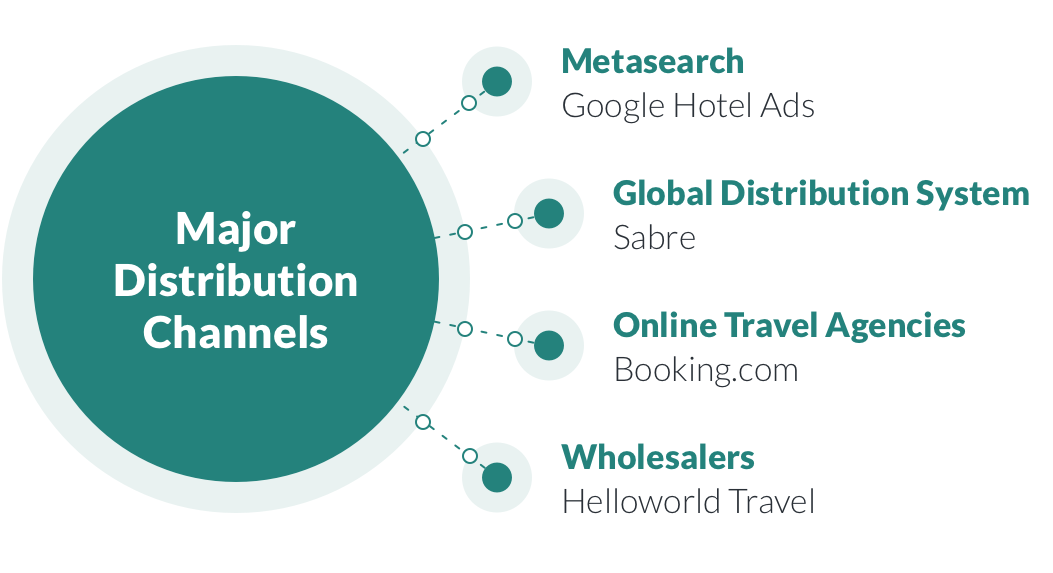
Hoteliers worldwide have unlimited options these days when it comes to distribution channels. While direct bookings are the most profitable, the benefit and scope of indirect bookings or distribution channels can’t be undermined.
An OTA like Booking.com is a popular example of a distribution channel that is a chain of businesses or intermediaries through which your hotel listing passes until it reaches the final booker.
Here are important details on the top four major online distribution channels:
1. Online Travel Agents (OTAs)
An OTA is a booking platform selling travel-related products, including airline tickets, car rentals, cruises, experiences, accommodations, etc.
Benefits: OTAs generate enormous exposure for hotels, making your rooms visible to local and international travelers who may not have found you otherwise. 40% of mobile users book their stays through OTAs and typically go to the hotel’s website to look for a better deal or more information. With a booking engine in place, you may be able to convert this bonus traffic to direct bookings.
Popular OTAs: Booking.com, Expedia, and Hotels.com.
Pay Structure: OTAs are the most expensive distribution channels, with commission fees of 15%-25%.
2. Wholesalers
A wholesaler is a middleman between a travel supplier (hotel) and an OTA/travel agent. It sources the hotel room nights in bulk, packages them, negotiates rates, and then sells them to OTAs and travel agents.
Benefits: Wholesalers take properties/rooms to a wide range of markets that hoteliers cannot reach directly, like international customers. They help hoteliers maximize their occupancy, guaranteeing a certain occupancy rate.
Popular Wholesalers: AOTGroup, CN Travel, FollowMe2Africa, Helloworld Travel
Pay Structure: Negotiated rates with hotels
3. Metasearch
A metasearch engine is a search engine that searches other search engines. In other words, a metasearch engine lets travelers compare hotel room rates from various online travel agencies (OTAs) and other booking sites.
Benefits: Travellers worldwide can find room prices from multiple booking options all from one place.
Popular metasearch engines: Google Hotel Ads, Tripadvisor, Kayak, and Trivago.
Pay Structure: Metasearch engines use click-based advertising, subscription services, commissions (12%-15%), sponsored placements, listing fees, and reservation fees.
4. Global Distribution System (GDS)
A GDS is an online network for companies within the travel industry. It takes information (inventory, price, and availability) from suppliers (airlines, hotels, cruise lines, car rentals) and makes it available to distributors (travel agents and tour operators.)
Benefits: A GDS is widely used by travel agents to search and book trips for their clients. Mainly because it allows them to bundle travel deals for the same trip. For example, they can book a hotel room, flight, or a rental car from the same system. At the same time, it allows hoteliers to tap into a wide travel network, especially corporate travel.
Popular GDSs: Sabre, Travelport, and Amadeus
Pay Structure: A GDS will charge a one-time setup fee and take either a percentage compensation or a flat fee per booking.
To increase your revenue and attract more travelers, it’s essential to have a diversified stream of bookings. An optimal online distribution strategy that combines both direct and indirect bookings can help you achieve this.
Thanks to modern technology, hotels can now make quick updates to all channels, avoiding issues with overbooking and rate parity, which would have been impractical in the past.
If you’re looking to create a solid distribution strategy for your property, there are some helpful guidelines that hoteliers often turn to:
- Have a clear business objective
- Target your best guests
- Maintain competitive rates
- Understand your profitability: GOPPAR VS RevPAR
- Decide on promotions you want to run
- Adjust rates based on market conditions
- Offer extras on your direct channels (websites)
Each and every distribution strategy will look different depending on the hotel type, size, and target audience. However, executing the strategy is only possible with the help of a channel manager.
Key benefits of using a hotel channel manager
A hotel channel manager isn’t just a powerful distribution tool, it’s a game changer. Integrated with the rest of your hotel operations, it can help you save time, increase efficiency, and grow your revenue in ways that would be impossible manually.
Before diving into the practical aspects of channel management for hotels, it’s important to understand why a channel manager is worth integrating into your hotel tech stack. A channel manager is more than just real-time updates—it’s about increasing visibility, driving more bookings, syncing your tech stack, and ultimately improving both guest satisfaction and revenue performance. Let’s dig into some more specific benefits.
Reasons to use a hotel channel manager:
- Increase online bookings: A channel manager expands your property’s presence across top OTAs and GDS platforms—putting your rooms in front of more travelers, 24/7.
- Boost hotel revenue: By syncing with multiple sales channels and adjusting rates dynamically based on market demand, a channel manager helps you maximize occupancy and pricing opportunities.
- Reduce the risk of overbookings: Real-time updates across all platforms eliminate double bookings and manual errors. What’s available in your PMS is what guests see everywhere.
- Free up your team: Automation replaces time-consuming manual updates, giving your staff more time to focus on high-impact tasks and the guest experience.
- Improve brand recognition: The more visible you are on reputable channels, the more familiar travelers become with your brand, leading to stronger trust and recognition.
- Boost direct bookings: OTAs don’t just drive bookings—they drive brand awareness. This “billboard effect” means travelers often discover your hotel on an OTA and then book direct. With smart distribution and optimized pricing, you can pair this effect with metasearch and retargeting strategies to bring more guests straight to your booking engine.
- Enable smarter revenue management: Make quick, informed pricing decisions with real-time data and insights. A channel manager empowers you to respond to trends, events, and seasonal shifts with confidence.
- Create a seamless, integrated tech stack: A channel manager connects with your PMS, booking engine, and other tools, ensuring all systems speak to each other and work in harmony.
- Enhanced reporting: Make better decisions faster. Access real-time performance data on each channel to spot trends, measure ROI, and refine your distribution strategy.
Other Powerful Systems to Use With a Hotel Channel Manager
Just like bread and butter, certain combinations in hotel management are a perfect match. A complete centralized control center for your hotel includes a booking engine, property management system (PMS), and channel manager.
Whether you’re already using some of these systems or considering their implementation, integration is essential. A channel manager should seamlessly blend with other daily-use systems, such as your PMS and reservation system, ensuring the precision and smooth operation of your property’s backend.
By centralizing customer information, you’ll provide a superior guest experience and enable your staff to input information swiftly and accurately.
The Following Systems Are Effective When Used With a Hotel Channel Manager:
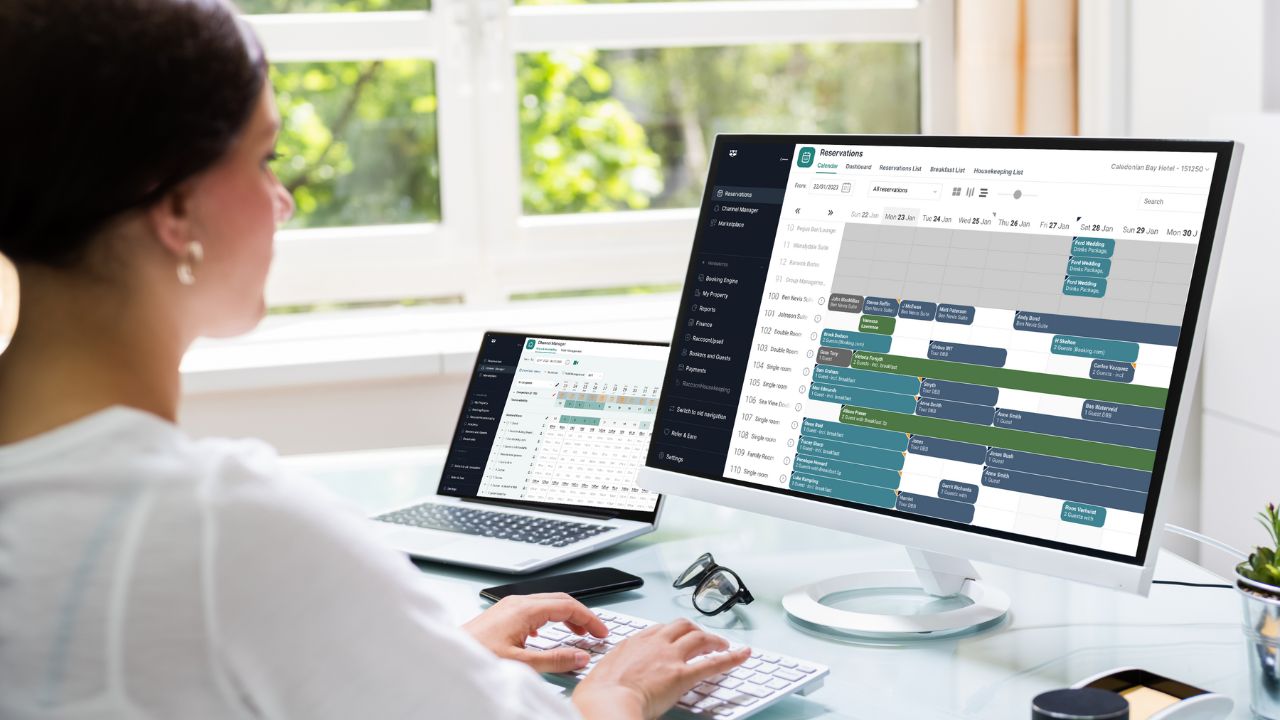
1. Property Management Software (PMS)
A Property Management System is the backbone of hotel operations, handling reservations, guest check-ins and check-outs, billing, and more.
When integrated with your channel manager, it ensures that room availability and rates are always up to date across all channels, minimizing the risk of overbookings and ensuring a seamless guest experience.
2. Booking Engine
A booking engine is a reservation processing system used by hotels and other properties to capture bookings and credit card information via their website, social media, or other marketing channels.
A booking engine replaced the tedious and dull hotel website ‘contact us’ cards.
3. Revenue Management Tool
Revenue management software ensures your rates are optimized by looking at what your competitors are doing and supply and demand. A revenue management tool works well with a hotel channel manager to ensure the rates you set are more or less on par with your competitors.
Underselling will mean you lose money, overpricing will mean you get fewer bookings, and pricing it right will mean you make a profit. With real-market data, it’s possible to predict and act accordingly.
Deciding on a Channel Manager For Your Hotel
Over the last few years, hospitality tech has really taken off. This is good news for hoteliers with plenty of channel manager software providers to choose from. The downside? There’s no such thing as a universal channel manager.
To help you decide, here are some factors to take into consideration:
- 2-Way API (Application Program Interface) Connection: Check if the channel manager offers a two-way API connection, enabling seamless communication between your PMS and booking channels.
- Rate Parity Adjustment: Look for rate parity adjustment capabilities to maintain consistent pricing across all platforms.
- Pricing: Understand the pricing structure. Some channel managers charge a fixed fee, while others take a percentage of your revenue. Make sure it fits your budget and revenue model.
- Scalability: Consider your future growth. Will the channel manager accommodate your needs as your hotel expands?
Data Insights: Make sure the channel manager provides valuable insights and reports to help you make informed decisions and enhance your hotel’s performance
Top Hotel Channel Manager Software
If you are looking for a reliable hotel channel manager software, there are various options to choose from. Here are some of the top providers in the market:
RoomRaccoon
Cloud-based channel manager hotel software that integrates with online travel agencies, offering real-time updates, centralized inventory management, and automated rate adjustments. It includes a property management system with guest communication, invoicing, and reporting features.
SiteMinder
A popular channel manager and online distribution platform for hotels, allowing them to manage availability and rates across various online channels, including OTAs. SiteMinder offers real-time updates, revenue management tools, and reporting features.
Cloudbeds
An all-in-one hotel management software with a built-in channel manager. It simplifies distribution management, automates rate and availability updates, and integrates with booking engines and OTAs. Cloudbeds also offers property management, reservation management, and guest communication tools.
Little Hotelier
A cloud-based property management and distribution system tailored for small hotels and B&Bs. It includes a channel manager for managing availability, rates, and bookings across online channels. Little Hotelier also provides reservation management, an online booking engine, and invoicing capabilities.
Sirvoy
A comprehensive cloud-based hospitality software suite, including a Property Management System, Booking Engine, and Channel Manager.
RoomRaccoon is a standout choice for hotel channel manager software due to its ease of use, seamless integration with multiple online travel agents and booking engines, as well as offering real-time updates, centralized inventory management, and automated room rate updates.
Pricing Considerations
If you operate an independent property in a budget-conscious world where all things can be purchased and separately installed, an all-in-one hotel management system like RoomRaccoon is the way to go.
This is because hotel software is only compatible with one another in certain instances. RoomRaccoon’s software solution, on the other hand, is designed to work seamlessly with your property, and pricing is much more transparent and straightforward.
You only pay for the features you need based on the number of rooms you have. This can help you save money and avoid the headaches that come with managing multiple contracts and support lines.
The Future of Hotel Channel Management: Exploring Emerging Trends and Technologies
Hotel channel manager systems in the hotel industry play a crucial role in the ever-changing hospitality industry by optimizing operations, improving guest experiences, and boosting revenue.
They oversee room rates, availability, and reservations on various online platforms. Now, let’s delve into the latest trends and technologies shaping their future.
Real-Time Automation: Modern systems offer real-time updates, managing inventory and prices automatically. This ensures accurate data, prevents overbooking, and enhances guest experiences.
Centralized Control: Integration with other hotel software systems is becoming common. Centralized dashboards streamline operations, reduce errors, and improve decision-making.
AI and Machine Learning: These technologies optimize pricing, predict demand, and personalize guest experiences. Data-driven decisions maximize revenue and cater to guest preferences.
Mobile Compatibility: Systems need to be mobile-friendly, allowing on-the-go management and instant communication with guests.
Advanced Reporting: Robust reporting and analytics provide insights into performance, channel distribution, and revenue streams, giving hotels a competitive edge.
In summary, the future of online hotel channel management hinges on real-time updates, integration, AI, mobile accessibility, and analytics. These advancements empower hotels to operate efficiently, boost revenue, and deliver exceptional guest experiences.
The Game-Changing Benefits of an All-In-One Solution
On the other hand, an all-in-one hotel management system offers many game-changing benefits. By switching to an all-in-one solution, you can streamline your operations and better manage all aspects of your hotel from a single platform.
This can help you save time and resources, increase efficiency, and enhance the overall guest experience.
Here are some key points to consider when investing in a cloud-based all-in-one HMS:
- Affordable; cost based on how many rooms you have
- One contract, one single support line
- Centralized solution
- Easy staff adaptation
- Multiple partner integrations like POS systems
- Easy cloud-based setup; “plug-and-play.”
By choosing an all-in-one HMS with a built-in channel manager, hotels can thrive in today’s competitive market and provide the best possible experience for their guests. Schedule a free demo to learn more about how RoomRacoon’s HMS can help transform your property into a smart and profitable business!
FAQ – Hotel Channel Managers
If managing multiple online booking platforms feels overwhelming or you’re struggling with rate updates, double bookings, or visibility gaps, this FAQ is for you. Below you’ll find clear, practical answers explaining how a channel manager works and how it can help your hotel save time, increase bookings, and keep every channel in sync—all from one place.
1. What is a hotel channel manager?
A hotel channel manager is software that connects your property to online booking channels like Expedia, Booking.com, Priceline, Airbnb, and GDS networks. It keeps your availability and rates updated everywhere in real time, helping you avoid overbookings and maximize exposure.
2. How does a channel manager work?
It integrates with your Property Management System (PMS) and pushes your room availability, pricing, and restrictions to all connected channels. When a new booking comes in, the system updates every platform instantly—no manual adjustments needed.
3. Why do hotels in the U.S. need a channel manager?
U.S. hotels often rely on a mix of OTAs, metasearch, brand.com, and corporate channels. Managing these manually can cause errors and missed opportunities. A channel manager automates updates, protects you from double bookings, and helps you stay visible wherever guests prefer to book.
4. How is a channel manager better than updating extranets manually?
Instead of logging into each OTA extranet one by one, a channel manager lets you update everything from a single dashboard. Many properties see a reduction of 60–80% in time spent on manual rate and availability changes.
5. What does “pooled inventory” mean?
Pooled inventory means all channels share the same real-time room availability. When one room is booked, availability updates everywhere automatically. This minimizes overbookings and is far more flexible than assigning fixed room allotments to each OTA.
6. What’s the difference between a PMS and a channel manager?
Your PMS handles operations like check-ins, folios and housekeeping. A channel manager handles distribution—syncing your availability and rates to OTAs and booking platforms. Together they form the backbone of a modern hotel tech stack.
7. How does a channel manager help prevent double bookings?
The system updates all channels instantly when a reservation is made or canceled. Because every platform uses the same availability, the risk of double bookings and overselling drops dramatically.
8. Does a channel manager improve online visibility?
Yes. With connections to OTAs, metasearch engines, niche channels, and GDS systems, your property appears in more places. Around 40% of mobile users book via OTAs, so being visible across key channels directly increases booking opportunities.
9. Which OTAs can a channel manager connect to?
Most solutions connect to major U.S. and international OTAs, including Expedia Group, Priceline, Hotels.com, Airbnb, Booking.com, Agoda, and regional niche channels. Many also connect to Google Hotel Ads and GDS networks like Amadeus, Sabre, or Travelport.
10. Does a channel manager help increase revenue?
Yes. By expanding your reach and preventing lost sales due to outdated rates or closed inventory, a channel manager helps you capture more demand. Combined with smart pricing, U.S. hotels often see meaningful year-over-year revenue growth.
11. Can a channel manager support dynamic pricing?
Many modern channel managers integrate with revenue management systems (RMS) to push dynamic or AI-driven prices to your channels. This keeps your hotel competitive without daily manual adjustments.
12. Does a channel manager support packages and promotions?
Yes. You can distribute special offers, fenced rates, and packages across selected channels. This helps you target specific segments—like extended stay, corporate, or weekend break guests—more effectively.
13. What’s the difference between pooled inventory and allocated inventory?
Pooled inventory shares one availability pool among all channels in real time. Allocated inventory assigns a fixed number of rooms to each channel. Pooled inventory helps avoid unsold rooms and maximizes total occupancy.
14. What is a two-way API connection?
A two-way API allows your PMS and channel manager to exchange data automatically. Bookings flow into your PMS and availability flows back to your channels without manual input—keeping everything synchronized.
15. Does a channel manager integrate with my booking engine?
Yes. Your website becomes a fully connected channel. When guests book directly, the channel manager updates all OTAs and other platforms instantly, helping you grow direct bookings safely.
16. Can a channel manager help maintain rate parity?
Yes. Because updates are centralized, your rates and restrictions are pushed consistently across all channels. This supports rate parity and reduces the risk of confusing price differences for guests.
17. How does a channel manager support group or corporate bookings?
Some systems allow you to manage blocks, allotments, and negotiated corporate rates while still keeping your public availability accurate on OTAs and your own website.
18. How important is reporting in a channel manager?
Reporting is crucial. A good channel manager shows which channels drive the most bookings, revenue, and profit, plus booking windows and cancellation patterns. This helps you optimize your channel mix and marketing spend.
19. Can a channel manager significantly reduce manual workload?
Yes. By automating rate and availability updates, many hotels report saving several hours per day of manual work, especially during high-demand seasons or busy weekends.
20. Is a channel manager useful for smaller independent hotels in the U.S.?
Definitely. Independent hotels, motels, inns, and boutique properties benefit the most. Automation helps smaller teams compete with large brands and manage multiple channels without extra headcount.
21. Is a channel manager secure?
Modern channel managers use encrypted connections, secure APIs, and role-based access controls. Guest data and booking details are transferred safely between your systems and the channels you work with.
22. Can I manage multiple properties with one channel manager?
Yes. Multi-property dashboards let you manage availability, pricing, and reporting for several hotels from a single login—a big advantage for regional groups and management companies in the U.S.
23. How much does a hotel channel manager cost?
Pricing depends on your room count, feature set, and number of connections. Most providers charge a monthly subscription. All-in-one platforms like RoomRaccoon bundle channel management with PMS and a booking engine, which often works out cheaper and simpler than separate tools.
24. What should I look for in a good channel manager?
Look for real-time syncing, pooled inventory, a robust two-way PMS API, strong OTA and GDS connections, clear reporting, easy setup, and responsive support. For U.S. hotels, reliability and speed of updates are especially important.
25. Why choose RoomRaccoon as your hotel channel manager?
RoomRaccoon offers a fast, reliable channel manager built into a complete hotel management system. It syncs availability in seconds, integrates with leading OTAs and PMS tools, automates pricing updates, and gives you one platform to manage distribution, reservations, payments, and reporting—helping your team work smarter, not harder.
Conclusion: A hotel channel manager makes it much easier to manage online distribution, avoid double bookings, and reach the guests who are most likely to book your rooms. With a user-friendly, fully integrated solution like RoomRaccoon, U.S. hotels can save time, grow revenue, and deliver a consistent guest experience across every channel.
Follow us


Michael


Subscribe to our newsletter for more on the latest hospitality & RoomRaccoon updates delivered straight to your inbox!