1What is a hotel channel manager?
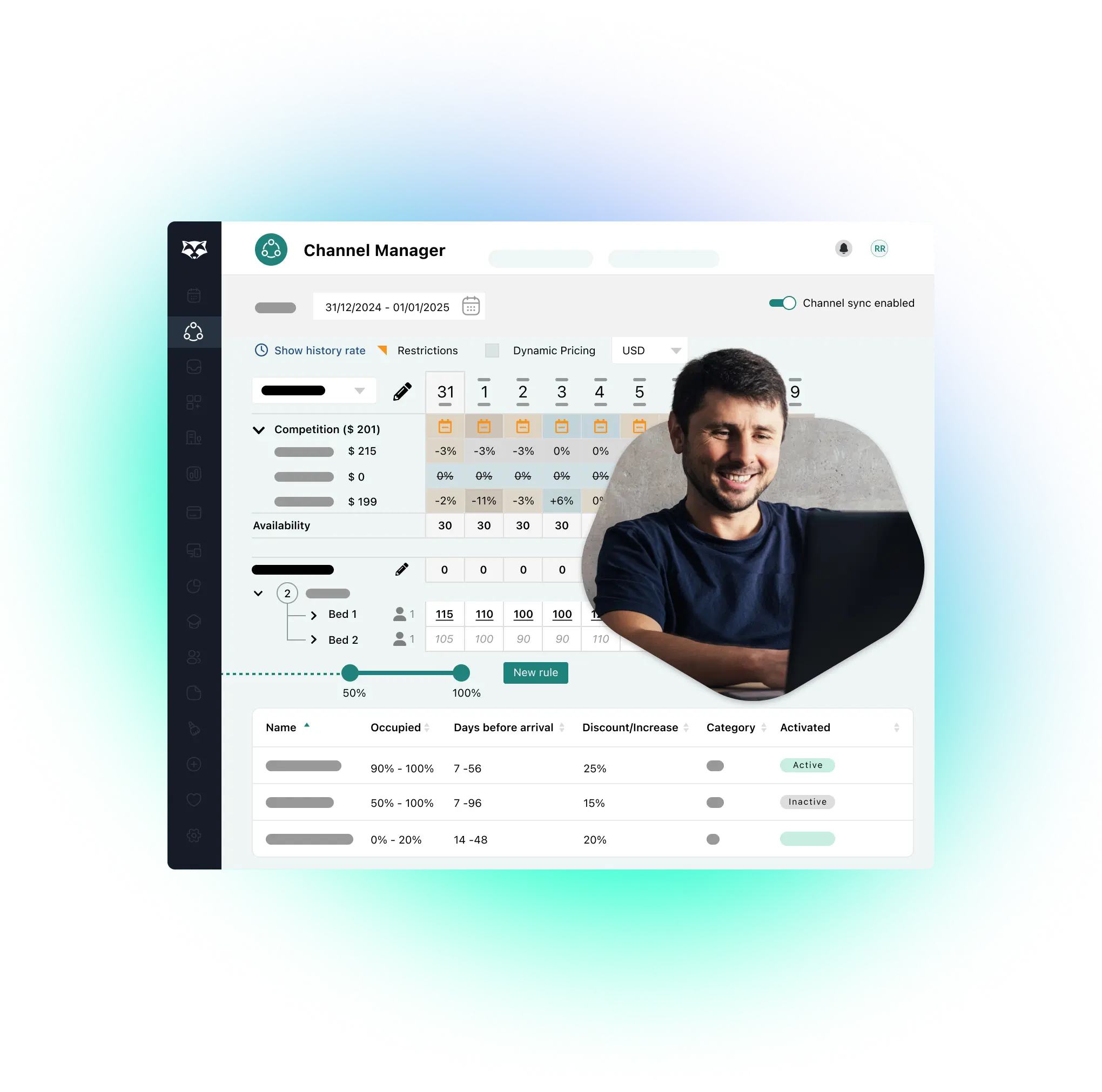
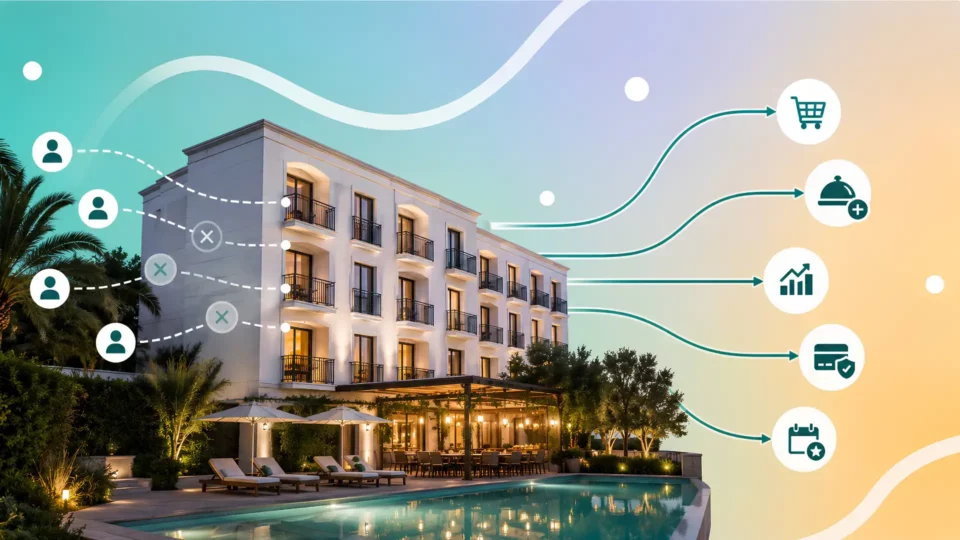
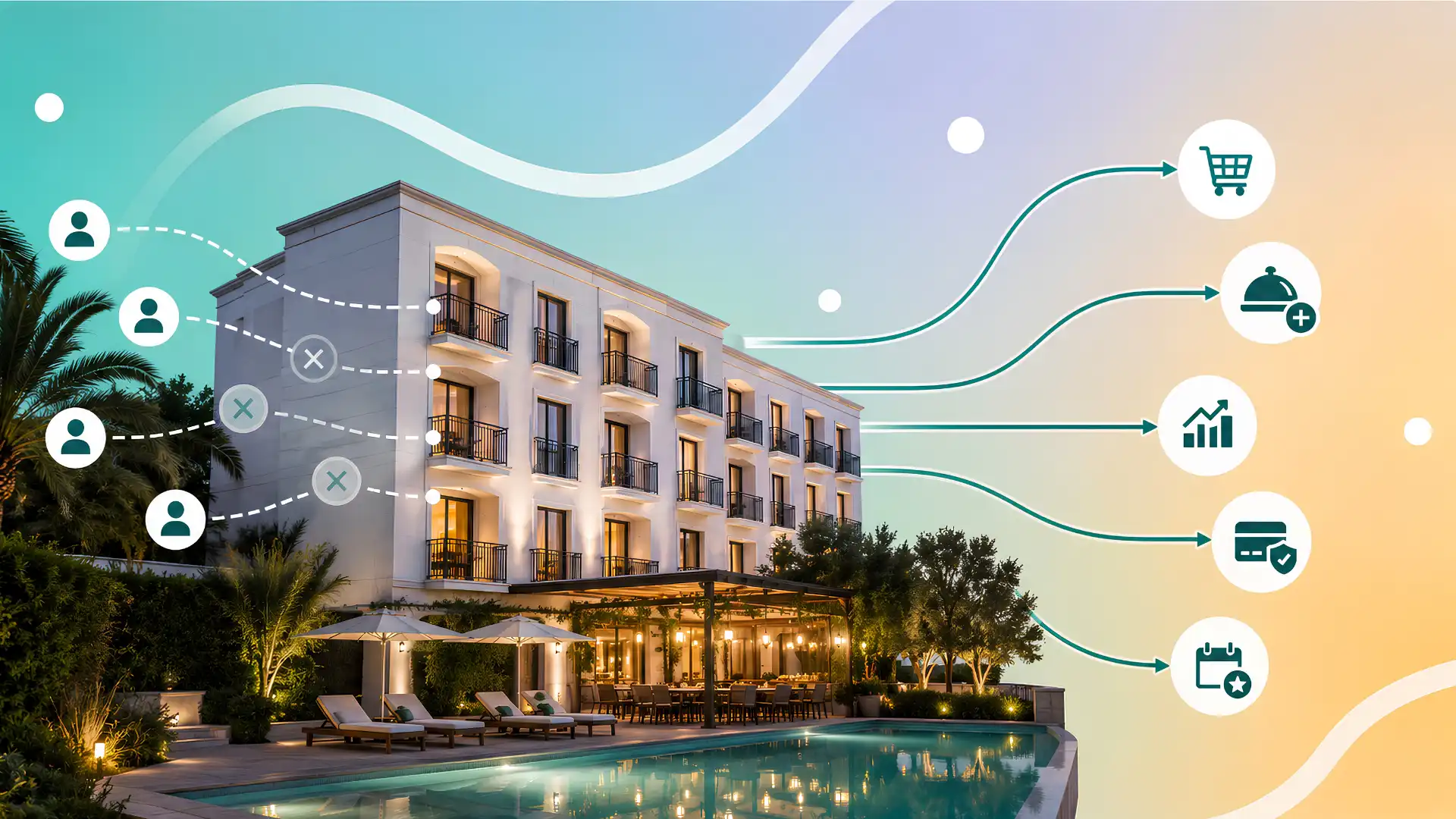
A hotel channel manager is cloud-based hotel software that automatically distributes and synchronizes room rates, availability, and restrictions across multiple online sales channels such as OTAs, metasearch platforms, and direct booking systems. It acts as a central distribution hub between a PMS, Booking Engine, and external channels, ensuring inventory accuracy and eliminating manual updates. This enables hotels to maintain real-time consistency, reduce overbookings, and streamline operations while improving overall distribution efficiency and revenue control.
2How does a channel manager work with a PMS and Booking Engine?
A channel manager integrates directly with a PMS and Booking Engine to create a unified hotel software ecosystem. When a reservation is made via any channel, the PMS records it, and the channel manager instantly updates availability across all connected platforms. Simultaneously, the Booking Engine reflects accurate inventory for direct bookings. This real-time synchronization ensures operational accuracy, reduces manual reconciliation, and supports automation across reservations, pricing, and guest data management.
3Why do hotels in the United States use channel manager software?
Hotels in the United States use channel manager software to efficiently manage a fragmented distribution landscape that includes OTAs, direct bookings, and regional platforms. The system centralizes control over inventory and pricing, reduces dependency on manual updates, and helps properties respond quickly to market demand. In a labor-sensitive environment, it improves operational efficiency, minimizes errors, and supports a balanced channel mix between third-party and direct bookings.
4What problem does a channel manager solve for hotel operations?
A channel manager solves the critical issue of inconsistent inventory and pricing across multiple booking channels. Without automation, hotels risk overbookings, outdated rates, and lost revenue due to manual errors. By centralizing updates and distributing them in real time, the system ensures accuracy across all channels. This reduces administrative workload, improves guest experience, and allows hotel staff to focus on higher-value operational and revenue management activities.
5What is the difference between a channel manager and a PMS?
A PMS is the operational backbone of a hotel, managing reservations, check-ins, housekeeping, billing, and guest profiles. A channel manager, by contrast, focuses on external distribution, pushing rates and availability to OTAs and other sales channels. While the PMS handles internal processes, the channel manager ensures external visibility and consistency. Together with a Booking Engine, they form a complete hotel software ecosystem connecting operations, distribution, and direct sales.
6What is the difference between a channel manager and a Booking Engine?
A Booking Engine is a guest-facing tool that allows direct reservations through a hotel’s website, while a channel manager distributes inventory and pricing across third-party platforms. The Booking Engine focuses on conversion and direct revenue, whereas the channel manager ensures all channels reflect accurate availability. Both systems work together within hotel software to support a diversified distribution strategy and reduce reliance on external intermediaries.
7Can small hotels, motels, and inns benefit from a channel manager?
Small hotels, motels, and inns benefit significantly from channel manager software because it reduces manual workload and operational complexity. Even with limited staff, properties can manage multiple OTAs, maintain accurate availability, and avoid costly overbookings. The system enables smaller operators to compete more effectively in digital distribution, maintain pricing consistency, and allocate time toward guest experience rather than repetitive administrative tasks.
8Which distribution channels can connect to a channel manager?
A channel manager typically connects to major OTAs, metasearch platforms, direct Booking Engines, and sometimes wholesalers or regional booking platforms. The goal is to centralize distribution within one system instead of managing separate extranets. In the U.S. market, this connectivity supports broader visibility, improved occupancy, and consistent pricing strategies across multiple demand sources while maintaining operational efficiency.
9How does a channel manager prevent overbookings?
A channel manager prevents overbookings by synchronizing inventory across all connected channels in real time. When a room is booked on one platform, availability is instantly updated everywhere else, ensuring the same room cannot be sold twice. This automated process removes reliance on manual updates and significantly reduces the risk of double bookings, which can damage guest satisfaction and operational stability.
10How does channel management support revenue management strategies?
Channel management supports revenue management by enabling precise control over pricing, availability, and restrictions across different channels. Hotels can adjust rates dynamically based on demand, occupancy, and market conditions while ensuring updates are applied consistently. This integration improves yield optimization, reduces pricing errors, and allows hotels to align distribution strategy with broader revenue management objectives.
11Does a channel manager help maintain rate parity across channels?
A channel manager helps maintain rate parity by distributing centrally managed pricing across all connected platforms. This reduces inconsistencies caused by manual updates and ensures that guests see aligned pricing regardless of the booking channel. While hotels may strategically vary rates, the system prevents accidental discrepancies that could undermine trust, violate agreements, or negatively impact conversion performance.
12What are the typical costs of a channel manager in the U.S.?
Channel manager costs in the U.S. typically depend on room count, number of integrations, feature depth, and whether the system is bundled with a PMS or Booking Engine. Pricing models may include flat monthly fees or tiered subscriptions. Beyond direct costs, hotels should consider the operational savings, reduced errors, and potential revenue gains that result from improved distribution accuracy and automation.
13What features should hotels prioritize in channel manager software?
Hotels should prioritize real-time synchronization, reliable two-way integrations, intuitive dashboards, rate and restriction management, reporting capabilities, and seamless connectivity with PMS and Booking Engine systems. Additional considerations include scalability, security, onboarding support, and automation features. The right channel manager should simplify operations, not add complexity, and should integrate smoothly into the hotel’s existing technology stack.
14How long does it take to implement a channel manager?
Implementation timelines vary depending on property size, system complexity, and number of channels. Smaller properties may complete setup quickly, while larger or multi-property operations require more detailed configuration. Key steps include mapping room types, connecting channels, configuring rate plans, and testing integrations. Proper onboarding ensures accurate synchronization between PMS, Booking Engine, and external distribution platforms.
15What data needs to be configured during setup?
During setup, hotels must configure room types, rate plans, occupancy rules, restrictions, cancellation policies, and channel mappings. Accurate data alignment between the PMS, channel manager, and Booking Engine is essential. Incorrect configuration can lead to synchronization issues, pricing errors, or booking conflicts, so careful setup and validation are critical for reliable system performance.
16What common mistakes do hotels make with channel managers?
Common mistakes include incorrect room mapping, inconsistent rate structures, overcomplicated pricing rules, and insufficient testing during implementation. Some hotels also connect too many channels without a clear strategy, creating unnecessary complexity. Effective use of a channel manager requires alignment between distribution strategy, revenue management, and operational workflows to ensure the system delivers measurable benefits.
17How does a channel manager influence direct versus OTA bookings?
A channel manager enables hotels to manage both direct and OTA bookings strategically by synchronizing inventory across all channels. While OTAs increase visibility and demand, direct bookings typically offer higher margins. By maintaining accurate availability and pricing, hotels can use restrictions and rate strategies to influence booking behavior and achieve a balanced, cost-effective distribution mix.
18Can a channel manager support multi-property hotel groups?
A channel manager can support multi-property operations by centralizing distribution management across multiple locations. It allows centralized control over pricing and inventory while maintaining property-level flexibility. This is particularly valuable for hotel groups that need standardized processes, portfolio visibility, and efficient oversight of distribution strategies across different markets.
19What payment and security considerations apply in the U.S.?
In the U.S., payment and data security are critical when using hotel software. Systems should align with PCI DSS standards to protect cardholder data and reduce fraud risk. Secure integrations between PMS, channel manager, and payment providers help minimize exposure. Hotels should also evaluate user permissions, encryption practices, and vendor responsibilities to ensure compliance and operational security.
20What privacy regulations affect hotel software in the U.S.?
Privacy regulations such as state-level laws, including those in California, influence how hotels collect, store, and process guest data. Hotels must ensure transparency, data access rights, and secure handling of personal information. When using a channel manager integrated with other systems, it is essential to understand data flows and vendor responsibilities to maintain compliance and protect guest privacy.
21Are there pricing transparency regulations hotels should consider?
Yes, pricing transparency is increasingly regulated in the U.S., with rules requiring clear disclosure of total costs to consumers. Hotels must ensure that rates and fees displayed across all booking channels are accurate and consistent. A channel manager helps enforce this consistency, reducing the risk of misleading pricing and supporting compliance with evolving consumer protection regulations.
22How does accessibility impact hotel booking technology?
Accessibility is an important consideration for hotel booking technology in the U.S., where digital accessibility standards apply to public-facing websites. Booking Engines and related systems should be usable by individuals with disabilities, ensuring compliance and inclusivity. Hotels should evaluate accessibility as part of their technology stack, alongside performance, integrations, and user experience.
23How do integrations with accounting, payments, and operations tools improve efficiency?
Integrations with accounting systems, payment providers, and operational tools reduce manual data entry and improve workflow efficiency. By connecting these systems with the PMS and channel manager, hotels can streamline financial reporting, payment processing, and daily operations. This reduces errors, enhances data accuracy, and supports better decision-making across the business.
24When should a hotel replace its channel manager?
A hotel should consider replacing its channel manager when it experiences frequent synchronization issues, limited integrations, poor usability, or constraints in revenue strategy. If staff rely heavily on manual fixes or if the system cannot support growth, it may no longer be suitable. Evaluating performance, scalability, and integration capabilities helps determine the right time for change.
25Why might a hotel choose RoomRaccoon as its channel manager?
RoomRaccoon offers an integrated approach where channel management is combined with a PMS and Booking Engine within one platform. This allows hotels to manage distribution, operations, and direct bookings from a single system, reducing complexity and improving data flow. For U.S. hoteliers, this can mean fewer integrations to manage, more efficient workflows, and better alignment between revenue strategy and daily operations.