















Hotel channel manager: the ultimate guide for 2026
- February 12, 2026
- Gertjan van Wijk
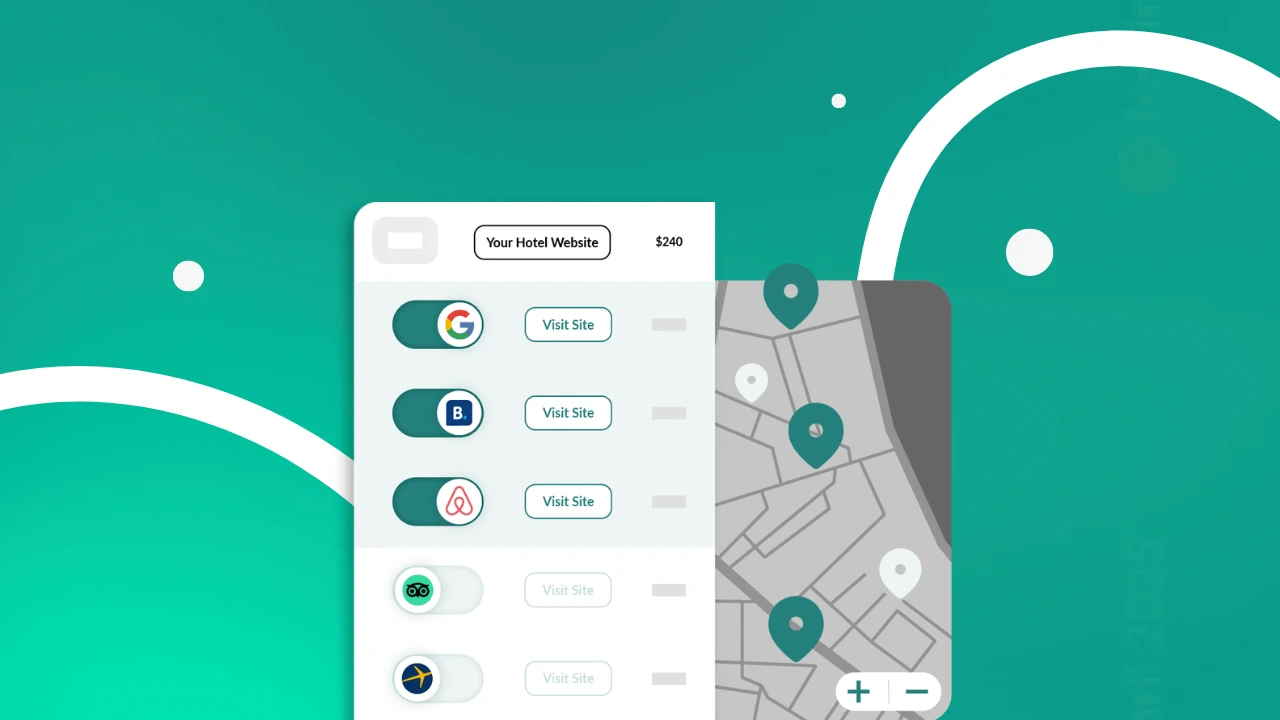
A hotel channel manager has become an essential part of modern hotel software. Where hoteliers once manually updated rates and availability across multiple booking channels, today this is handled centrally and in real time.
In this ultimate guide for 2026, you’ll learn what a hotel channel manager is, how it works, and how to use channel management to prevent overbookings, increase visibility, and optimize hotel revenue.
A hotel channel manager keeps rates and availability synchronized across OTAs, metasearch platforms, and other booking channels—helping prevent overbookings, reduce manual work, and improve channel profitability in 2026.
Hotel channel manager at a glance
What is a hotel channel manager?
A hotel channel manager is software that allows you to centrally manage room rates, availability, and booking restrictions, and automatically synchronize them across all online booking channels.
What problems does it solve?
It prevents overbookings, reduces manual work, and ensures that rates and availability are consistent and up to date across every channel.
Who is it for?
Hotels, B&Bs, aparthotels, hostels, and other accommodations that sell rooms through multiple online distribution channels.
Key benefits
Real-time updates, greater online visibility, fewer errors, better insight into channel performance, and higher revenue per available room.
Why is it essential in 2026?
With growing OTA dependency, ongoing staffing shortages, and dynamic pricing becoming the norm, centralized and automated distribution is no longer optional—it’s critical.
Introduction: channel management in the modern hotel
Channel management has evolved significantly over the past few years. Hotels no longer sell rooms through just one or two fixed channels, but through a complex mix of online travel agencies (OTAs), metasearch platforms, direct websites, and corporate or business travel networks. Each channel has its own rules, pricing structures, and target audiences, making manual management inefficient and error-prone.
Where hoteliers once managed multiple extranet accounts separately, the industry is increasingly moving toward centralized distribution. With a hotel channel manager, rates and availability are controlled from a single system and pushed in real time to all connected channels. This creates clarity, operational stability, and a consistent presentation of your property across every platform.
This guide is designed for anyone involved in professional hotel distribution—from small B&Bs to boutique hotels, aparthotels, and hostels. Whether you’re just getting started with online distribution or looking to refine your channel strategy for 2026, this guide will help you approach channel management in a strategic and future-ready way.
What is a hotel channel manager?
A hotel channel manager is software that enables hotels to centrally manage their online room distribution. Instead of updating rates and availability separately for each booking channel, a channel manager acts as a single distribution hub. Any change you make is automatically pushed in real time to all connected channels.
Channel managers are designed to remove complexity from hotel distribution. They provide consistency, speed, and control—especially for properties that sell rooms across multiple online platforms at the same time.
Definition: hotel channel manager and channel management software
A hotel channel manager is channel management software that centrally manages room rates, availability, and booking restrictions, and automatically synchronizes them with online booking channels such as OTAs, metasearch platforms, and reservation systems.
The software acts as a bridge between the hotel’s property management system (PMS) and external distribution channels. This ensures that inventory remains accurate everywhere and significantly reduces the risk of errors or double bookings.
What does a channel manager actually do?
A channel manager automates and streamlines the online distribution of hotel rooms. From a single, centralized dashboard, you can:
- Manage room availability across all channels simultaneously
- Update and synchronize rates and rate plans
- Set booking restrictions, such as minimum length of stay or arrival rules
- Automatically receive reservations and push them to the PMS
- Gain insight into performance by distribution channel
When a room is booked on one channel, the channel manager immediately updates availability on all other connected platforms. This process is fully automated and happens in real time.
What a channel manager is not
A channel manager is often confused with other hotel systems. Understanding the differences is essential.
Channel manager vs PMS
A property management system (PMS) focuses on internal hotel operations such as reservations, check-in and check-out, billing, and room status. A channel manager is dedicated solely to external room distribution. The two systems work together but serve different purposes.
Channel manager vs booking engine
A booking engine is designed to capture direct reservations through the hotel’s own website. A channel manager connects with external platforms such as OTAs and GDS networks. Together, they support a balanced mix of direct and indirect bookings, but they are separate tools.
Channel manager vs revenue management software (RMS)
Revenue management software analyzes demand, market conditions, and competitors to determine optimal pricing. The channel manager ensures those prices are distributed accurately and consistently across all channels. The RMS defines the strategy; the channel manager executes it.
Common terms and synonyms
In practice, several terms are used to describe channel management solutions. These often refer to the same type of software:
- Hotel channel manager
- OTA channel manager
- Channel management software
- Hotel distribution software
How does a channel manager work?
Real-time synchronization of rates and availability
At the core of a channel manager is real-time synchronization. Whenever you update a rate or a room is booked, all connected channels are updated immediately. This ensures that potential guests always see accurate availability and helps prevent rooms from being sold more than once.
2-way API connections explained
Modern channel managers use bidirectional API connections. This means data flows in both directions:
- From the hotel to the channels: rates, availability, and booking restrictions
- From the channels back to the hotel: reservations, modifications, and cancellations
Thanks to these 2-way connections, reservations are automatically processed in the PMS and inventory remains synchronized across all platforms.
Shared inventory
With shared inventory, all booking channels draw from a single pool of available rooms. When a room is booked on one platform, availability is automatically reduced across all other channels. This maximizes occupancy while minimizing the risk of overbookings.
Reservation flow: from booking channel to PMS
A typical reservation flow looks like this:
A guest books a room via an OTA → the channel manager receives the reservation → the booking is automatically pushed to the PMS → availability is immediately updated across all other channels.
This entire process is fully automated and typically takes place within seconds.
Updates, alerts, and error prevention
Channel managers often provide automatic alerts for new reservations, changes, or synchronization issues. This allows hotels to respond quickly if something goes wrong. Through automation and monitoring, the risk of human error is significantly reduced and distribution remains reliable—even during peak periods.
Why a channel manager is essential in 2026
The role of channel management has changed dramatically over the past few years. What was once a helpful add-on has become a core component of professional hotel operations. The combination of more distribution channels, higher guest expectations, and ongoing staffing pressure makes centralized and automated distribution essential.
Growing dependence on OTAs
Online travel agencies play an increasingly important role in how guests discover and book accommodations. For many hotels, OTAs account for a significant share of occupancy—especially in international markets and during peak seasons. At the same time, complexity continues to grow, as each platform has its own rules, rate structures, and availability logic.
Without a channel manager, managing multiple OTAs quickly becomes unmanageable. Centralized control ensures consistent rates and availability, which is critical for visibility, ranking, and reliability on these platforms.
Smaller teams, greater need for automation
In 2026, hotels are operating with leaner teams and higher operational pressure. Manually updating rates and availability across multiple channels is not only time-consuming, but also prone to errors. Automation is no longer a luxury—it’s a necessity.
A channel manager removes repetitive tasks and ensures changes are applied automatically. This allows staff to focus on guest experience and operational quality instead of administrative work.
Preventing overbookings during peak periods
During busy periods—such as events, holidays, or last-minute demand spikes—availability changes rapidly. Without real-time synchronization, the risk of selling the same room on multiple channels increases significantly.
A channel manager prevents this by processing reservations instantly and automatically updating inventory across all connected channels. As a result, availability remains accurate even when demand fluctuates quickly.
The billboard effect and direct bookings
Many guests use OTAs to compare accommodations, but ultimately book directly through the hotel’s website. This phenomenon is known as the billboard effect. A key requirement is that rates and availability are consistent and reliable across all channels.
A channel manager supports this by ensuring consistent data everywhere. Combined with a strong booking engine, hotels can benefit from OTA visibility while increasing their share of direct bookings.
Online distribution channels for hotels
Hotels use different types of online distribution channels to reach a wide range of guest segments. Each channel plays a specific role within the overall distribution strategy. A channel manager brings all of these channels together in a single, centralized system.
Online travel agencies (OTAs)
OTAs are online platforms where travelers can search for, compare, and book accommodations. They offer hotels broad exposure and visibility to both domestic and international guests. Well-known examples include Booking.com, Expedia, and Hotels.com.
The main drawback of OTAs is that they charge a commission per booking. Even so, they remain essential for many hotels due to their marketing power and global reach.
Metasearch engines
Metasearch platforms compare prices across multiple booking sites and redirect users to their chosen booking channel. They act as price comparison tools and increase hotel visibility early in the guest’s search journey.
Examples of metasearch engines include Google Hotel Ads, Trivago, and Tripadvisor. These channels are especially effective when combined with direct bookings through the hotel’s own website.
Global distribution systems (GDS)
Global distribution systems connect hotels with travel agencies and corporate booking platforms. They are widely used in corporate travel and for international bookings.
Well-known GDS networks include Amadeus, Sabre, and Travelport. For hotels targeting corporate travelers or international markets, a GDS connection can be highly valuable.
Distributors and bedbanks
Distributors—often referred to as bedbanks—purchase room inventory at agreed rates and resell it to tour operators and booking platforms. They provide access to markets that hotels may not reach directly.
This type of channel can help increase occupancy, but it requires clear agreements around pricing and availability to avoid rate conflicts.

When should you use which channel?
An effective distribution strategy combines multiple channels. OTAs provide reach, metasearch supports visibility and direct bookings, GDS platforms serve the corporate segment, and distributors help target specific markets.
The most suitable channels depend on the type of property, target audience, and the market in which the hotel operates. A channel manager makes it possible to manage this channel mix centrally and make strategic decisions per channel.
Channel management strategy for hotels
A hotel channel manager is most effective when it is part of a well-defined distribution strategy. The goal of channel management is not to be present on as many channels as possible, but to use the right channels in the right way. This requires deliberate choices, continuous monitoring, and flexibility.
Determining the right channel mix
Not every distribution channel is suitable for every property. The ideal channel mix depends on factors such as location, target audience, hotel type, and seasonal demand. A city hotel focused on corporate guests will use different channels than a boutique hotel or a B&B in a leisure destination.
By evaluating reach, costs, and return per channel, hotels can build a balanced mix. A channel manager supports this by providing insights into channel performance, helping hoteliers decide where to focus their efforts.
Direct vs indirect bookings
Direct bookings through the hotel’s own website are typically the most profitable, as no commissions are paid. Indirect bookings through OTAs, on the other hand, provide reach and visibility—especially among new or international guests.
A strong channel management strategy combines both. OTAs are used to drive discovery, while the hotel website is optimized to convert guests to direct bookings. Consistent rates and availability across all channels are essential to make this approach work.
Seasonal distribution strategy
Supply and demand vary significantly by season. During high-demand periods, it may be wise to limit availability on high-commission channels and prioritize direct bookings. In slower periods, OTAs and distributors can help reduce empty rooms.
With a channel manager, rates, availability, and restrictions can easily be adjusted by season. This keeps the distribution strategy flexible and aligned with current market conditions.
Rate parity: rules, risks, and exceptions
Rate parity means offering the same room at the same price across all channels. Many OTAs require this, as price discrepancies can undermine guest trust.
At the same time, there are situations where hotels intentionally deviate from rate parity—such as by offering added value or perks for direct bookings. A channel manager helps apply these exceptions in a controlled way, without creating unwanted rate inconsistencies.
Common mistakes in channel management
Many hotels make similar mistakes when managing distribution. Examples include manually updating channels, relying too heavily on a single OTA, or failing to analyze channel performance. Inconsistent pricing and outdated availability are also common issues.
A channel manager reduces these risks, but only when it is properly configured and actively managed. Regular evaluation of channels and performance remains essential for long-term success.
Channel management and hotel marketing
Channel management and hotel marketing are closely connected. Distribution determines where and how your hotel is visible, while marketing shapes how guests perceive and remember your property. When these two disciplines are aligned, they reinforce each other and create a stronger overall strategy.
Channel management as part of your marketing strategy
Every distribution channel is also a marketing channel. How your hotel is presented on OTAs, metasearch platforms, and your own website directly influences brand perception. Channel management ensures that this presentation remains consistent and up to date.
By approaching distribution strategically, hotels not only improve occupancy but also strengthen their brand position in the market.
Visibility through OTAs and brand recognition
For many guests, OTAs are the first point of contact with a hotel. Consistent presentation, accurate information, and reliable pricing all contribute to recognition and trust.
When guests encounter your hotel again—such as on your own website—this familiarity increases the likelihood of a direct booking. Channel management supports this process by maintaining uniform content and rates across all platforms.
Channel manager and Google Hotel Ads
Metasearch platforms play an increasingly important role in the booking journey. Through Google Hotel Ads, hotels can display rates and availability directly within search results. A channel manager supplies the real-time data required to keep these ads accurate and up to date.
This integration helps increase visibility while simultaneously driving direct bookings, without relying on a single distribution channel.
Packages, promotions, and campaigns across channels
Hotels increasingly use packages and limited-time promotions to target specific guest segments. Examples include weekend offers, seasonal packages, or corporate travel deals.
With a channel manager, these offers can be created centrally and rolled out in a controlled way across selected channels. This keeps campaigns organized and prevents promotions from appearing unintentionally on every platform.
Content and price consistency across all platforms
Inconsistent content or pricing differences across channels can create confusion and reduce guest trust. Photos, room types, descriptions, and rates should align everywhere.
Channel management helps enforce this consistency. By using a single central source for distribution, information remains accurate and reliable, supporting both conversion rates and brand value.
Pricing management and revenue optimization
Pricing management is one of the most critical components of successful hotel distribution. A channel manager plays a central role by not only distributing rates, but also making pricing manageable and flexible. Combined with solid insights, channel management forms the foundation for long-term revenue optimization.
Setting channel-specific rates
Not all distribution channels have the same cost structure or audience. As a result, it is often strategic to apply different rates by channel—for example, higher rates on high-commission platforms or more competitive pricing on the direct channel.
A channel manager makes it possible to define channel-specific pricing rules and manage them centrally. This allows hotels to maintain control over their pricing strategy without switching between multiple platforms.
Dynamic pricing through the channel manager
Dynamic pricing means automatically adjusting rates based on demand, availability, seasonality, or external factors such as local events. While revenue management software typically determines the pricing logic, the channel manager ensures that these rates are distributed accurately across all channels.
By combining dynamic pricing with real-time synchronization, hotels can respond quickly to market conditions—maximizing revenue during high-demand periods and reducing vacancy when demand softens.
Bulk updates and pricing rules
Hotels often manage multiple room types, rate plans, and seasons simultaneously. In this context, manual updates do not scale. Channel managers therefore offer bulk update capabilities, allowing rates or restrictions to be adjusted across multiple channels or date ranges in a single action.
In addition, pricing rules can be applied, such as automatic rate increases as occupancy rises or discounts during low-demand periods. This reduces manual effort and ensures consistent execution of the pricing strategy.
KPIs: RevPAR, GOPPAR, and channel performance
Effective pricing management depends on clear performance insights. Common KPIs in channel management include RevPAR (Revenue per Available Room), GOPPAR (Gross Operating Profit per Available Room), and performance by distribution channel.
By analyzing these metrics per channel, hotels gain insight into which platforms truly drive profitability. A channel manager supports this analysis with reporting tools that help fine-tune pricing and distribution decisions.
Channel management in peak and crisis situations
Peak periods and unexpected disruptions place high demands on hotel room distribution. In these situations, a channel manager proves its value by providing speed, visibility, and error prevention.
Distribution during events and high demand
During events, holidays, or periods of high demand, availability changes rapidly. Rates need to be adjusted and restrictions tightened to maximize revenue.
With a channel manager, hotels can respond quickly by adjusting rates and availability centrally. These changes are immediately pushed to all channels, allowing hotels to fully capitalize on peak demand without added administrative pressure.
Managing last-minute cancellations effectively
Cancellations close to arrival often result in unexpected vacant rooms. Without centralized distribution, it can be difficult to make these rooms available again in time.
A channel manager ensures that newly available rooms are immediately reopened across all connected channels. This increases the likelihood of capturing last-minute demand and helps reduce revenue loss.
Preventing overbookings during sudden demand spikes
Sudden increases in demand—caused by factors such as weather disruptions or changes in travel plans—significantly raise the risk of overbookings. When multiple channels are not fully synchronized, the same room can be sold more than once.
Through real-time synchronization, a channel manager prevents rooms from remaining available on multiple platforms at the same time. This protects both hotel operations and the property’s reputation.
Responding quickly to market changes
Crisis situations, such as sudden travel restrictions or economic fluctuations, require rapid adjustments to distribution and pricing. Hotels must be able to respond flexibly without losing time to manual processes.
With a channel manager, rates, availability, and channel selection can be adjusted instantly from a single centralized system. This enables hotels to react quickly to changing market conditions while maintaining operational continuity.
Combining a channel manager with other hotel systems
A channel manager delivers the most value when it operates as part of a broader hotel technology ecosystem. By integrating with other systems, data flows automatically between platforms, reducing manual work, minimizing errors, and supporting efficient daily operations.
Channel manager and PMS
The connection between a channel manager and a property management system (PMS) forms the backbone of hotel automation. The PMS manages internal operations such as reservations, room status, and guest information, while the channel manager handles external distribution.
When these systems are integrated, new reservations are automatically delivered from booking channels into the PMS. At the same time, the channel manager immediately updates availability across all other channels. This prevents double bookings and ensures inventory accuracy at all times.
Channel manager and booking engine
A booking engine focuses on capturing direct reservations through the hotel’s own website. When combined with a channel manager, hotels benefit from a powerful distribution mix where both direct and indirect bookings are managed centrally.
The channel manager ensures that rates and availability in the booking engine match those on external channels. As a result, guests always see up-to-date information, increasing trust and improving the likelihood of direct bookings.
Channel manager and revenue management software
Revenue management software analyzes demand patterns, seasonality, and market trends to determine optimal pricing. The channel manager then plays an execution role by automatically distributing these rates across all connected channels.
By combining these systems, hotels create a closed-loop process: the revenue management system defines the pricing strategy, the channel manager executes it, and performance is measured through reporting. This makes data-driven pricing optimization scalable and manageable.
All-in-one hotel management systems
More hotels are choosing all-in-one hotel management systems that integrate the PMS, channel manager, booking engine, and sometimes payments within a single platform. The main advantage is that all functions work together seamlessly, without separate integrations or multiple contracts.
Smaller and mid-sized properties, in particular, benefit from this approach due to simpler implementation and more intuitive day-to-day operations. Larger hotels may still opt for separate systems, depending on complexity and customization requirements.
Channel management by accommodation type
While the core principles of channel management apply to every property, the way a channel manager is used varies by accommodation type. The right setup depends heavily on target audience, scale, and length of stay.
Channel management for boutique hotels
Boutique hotels often focus on experience, design, and personalized service. Online visibility is important, but it must align with the brand. Channel management helps boutique hotels remain selectively present on channels that match their desired audience.
By keeping rates, availability, and content consistent, boutique hotels maintain control over their brand image and avoid unwanted price comparisons on less suitable platforms.
Channel management for B&Bs and small hotels
For B&Bs and smaller hotels, time savings are one of the main reasons to use a channel manager. With limited staff capacity, manually managing multiple channels is often not realistic.
A channel manager automates updates and prevents errors, allowing owners and small teams to spend more time on guest interaction. At the same time, it enables visibility across multiple channels without adding administrative workload.
Channel management for aparthotels and short stays
Aparthotels and short-stay accommodations often work with varying lengths of stay and multiple pricing structures. Channel management plays an important role in managing availability, minimum stay requirements, and rate variations.
Through centralized control, these properties can respond flexibly to both short-term and extended stays without losing visibility into overall inventory.
Channel management for hostels and group accommodations
Hostels and group-focused properties work with multiple bed types, shared rooms, and group reservations. This requires precise coordination of availability and pricing.
A channel manager helps manage this complexity through real-time updates and centralized control. As a result, properties with high turnover and fluctuating occupancy can distribute inventory efficiently and accurately.
Implementing a channel manager
Implementing a channel manager is a key moment in hotel operations. Proper preparation and a phased approach ensure the system delivers value immediately and avoids disruptions to daily workflows. While modern channel managers are user-friendly, careful configuration remains essential.
Preparation: data, room types, and rates
A successful implementation starts with cleaning and structuring your data. Room types, inventory counts, rates, and restrictions must be clear and consistent before connecting to external channels.
It’s important to define rates per room type, season, and channel in advance. Rules around minimum length of stay, arrival days, and packages are also prepared during this phase. The stronger this foundation, the smoother the rest of the process.
Connecting OTAs and the PMS
After preparation, the technical connection with OTAs and the property management system (PMS) is set up. During this step, room types and rate plans are mapped between the internal system and external channels.
This mapping is critical: an incorrect setup can lead to inaccurate availability or pricing. For this reason, the process is typically supported by onboarding specialists or the software provider’s support team.
Testing and go-live
Before going live, the system is thoroughly tested. Test reservations verify that bookings flow correctly into the PMS and that availability updates in real time across all channels.
Only once all scenarios function as expected is the channel manager fully activated. A controlled go-live reduces the risk of errors and builds confidence within the hotel team.
Staff training
A channel manager is only effective when staff understand how to use it. Training should cover not only technical tasks, but also distribution logic, pricing strategy, and channel performance.
By involving staff early in the implementation, adoption increases and the system becomes an active tool rather than something that runs unnoticed in the background.
Initial optimizations after go-live
After launch, the optimization phase begins. During this period, channel performance, pricing, and occupancy are reviewed. Based on early data, adjustments can be made to rates, channel mix, and restrictions.
This phase is essential for maximizing the return on the channel manager and further refining the distribution strategy.
KPIs and success measurement after implementation
To evaluate implementation success, hotels track KPIs such as occupancy rate, RevPAR, channel performance, and the share of direct bookings.
It’s also important to monitor operational indicators, such as the number of manual corrections required and the time spent managing distribution. A successful implementation results in less manual work and stronger financial performance.
Security, stability, and data protection
Channel management involves processing sensitive data such as reservation details and guest information. That’s why security, system stability, and regulatory compliance play a central role when selecting and using channel management software.
Data security and cloud architecture
Modern channel managers are built on cloud-based architectures designed for scalability and security. Data is encrypted both at rest and in transit, helping prevent unauthorized access.
A reliable cloud infrastructure ensures continuous system availability and resilience during peak loads—for example, during high booking volumes or seasonal demand spikes.
GDPR, privacy regulations, and guest data protection
Hotels operating internationally must comply with data protection regulations such as the General Data Protection Regulation (GDPR) in Europe. In the United States, privacy requirements may also be influenced by regulations such as the California Consumer Privacy Act (CCPA), depending on location and guest origin.
A channel manager supports compliance by maintaining clear data flows, limiting data sharing to what is strictly necessary, and offering options for data access and deletion. This allows hotels to stay in control of guest privacy and regulatory obligations across different markets.
User roles, permissions, and access control
Not every team member needs the same level of access. Through role-based permissions, hotels can define who is allowed to adjust rates, manage reservations, or view reports.
This reduces the risk of errors and improves internal security. Access control is especially important for larger teams or multi-property operations where responsibilities are distributed across locations.
Reliability, uptime, and fallback scenarios
Reliability is critical in hotel distribution. System downtime can immediately lead to revenue loss or overbookings. For this reason, a channel manager should offer high uptime and clearly defined fallback mechanisms.
Examples include automatic recovery processes, system monitoring, and alerts when synchronization issues occur. These safeguards help ensure distribution remains stable even when technical issues arise.
Channel management and cost control
Beyond visibility and occupancy, cost control plays an increasingly important role in hotel distribution. Not every booking contributes equally to profitability. Channel management helps hotels not only generate more bookings, but also manage performance and margins more effectively.
Gaining insight into commissions by channel
Distribution channels apply different commission rates and cost structures. OTAs typically charge a percentage per booking, while other channels may operate on fixed fees or subscription models.
A channel manager makes it possible to analyze costs per channel. By comparing commissions with revenue and volume, hotels gain a clearer picture of each channel’s true value—preventing decisions based solely on occupancy levels.
Measuring profitability by distribution channel
Channel profitability goes beyond total revenue. Factors such as commission levels, cancellation rates, and average length of stay all influence net performance.
Using channel management reports, hotels can identify which channels consistently deliver healthy margins and which mainly drive volume at higher cost. These insights form the basis of a sustainable distribution strategy.
When a channel becomes too expensive
A distribution channel may appear successful on paper but prove too costly in practice. This can happen when commissions increase, cancellation rates rise, or bookings skew toward short stays with lower profitability.
Channel management helps identify these trends early. Hotels can then limit availability, adjust pricing, or use the channel more selectively—without removing it entirely from the mix.
Reducing OTA dependency strategically
OTAs remain essential for reach and visibility, but overreliance introduces risks such as rising commissions, changing terms, and reduced negotiating power.
By using channel management strategically, hotels can increase the share of direct bookings and create a more balanced channel mix. This leads to better cost control and a more stable long-term revenue model.
International distribution and multilingual support
For hotels targeting international guests, cross-border distribution is essential. This adds complexity related to channels, language, currency, and regional regulations. Channel management provides the technical and strategic foundation to manage this complexity effectively.
International OTAs vs local platforms
International OTAs offer global reach and are often the starting point for travelers unfamiliar with a destination. At the same time, local platforms can be highly effective in specific markets, as they better reflect local search behavior and preferences.
A channel manager enables hotels to manage both international and local OTAs centrally. This allows properties to select the most effective channels per market without increasing operational complexity.
Multilingual content and price display
International guests expect information in their own language. Room types, descriptions, and booking conditions should be clear and consistent regardless of channel or region.
Channel management supports multilingual distribution by managing content and pricing centrally and pushing it accurately to each platform. This builds trust and increases conversion rates.
Currency handling, taxes, and regional pricing differences
International distribution also involves handling multiple currencies, tax rules, and regional pricing expectations. Rates must be converted accurately and aligned with local market norms—without creating unintended discrepancies between channels.
A channel manager helps manage this complexity through centralized pricing logic and clear channel rules, ensuring pricing consistency across regions.
GDS and international corporate travelers
Global distribution systems (GDS) play an important role for corporate and international travelers. Through GDS connections, hotels gain visibility within travel agencies and corporate booking tools worldwide.
Channel management makes it possible to integrate GDS connections into the overall distribution strategy. This opens access to new markets and supports a steady flow of corporate bookings—particularly in an international context.
How do you recognize a good hotel channel manager?
Not all channel managers are created equal. While many solutions offer similar core features, they can differ significantly in reliability, flexibility, and ease of use. By evaluating a few key criteria, you can determine whether a channel manager is the right fit for your property and stage of growth.
Technical reliability and speed
A good channel manager operates reliably and synchronizes data in real time. Delays in updates increase the risk of overbookings and incorrect pricing, especially during peak periods.
Reliability also means the system can handle high volumes and remains available at all times. High uptime, active monitoring, and automatic error detection are important indicators of technical quality.
Ease of use for hotel teams
Channel management software should be powerful, but also easy for hotel teams to understand. An intuitive interface, clear workflows, and logical settings make a real difference in daily operations.
When a system is too complex, it is often underused. A strong channel manager supports efficient workflows and lowers the barrier for staff to actively manage distribution and pricing.
Insights, reporting, and control
Performance insights are essential for optimizing distribution. A good channel manager provides clear reports on bookings, revenue, and performance by channel—without requiring external tools.
These insights allow hotels to make targeted adjustments, such as refining channel selection, revising pricing, or reallocating availability. The clearer and more actionable the data, the more effective decision-making becomes.
Integrations and scalability
A channel manager does not operate in isolation—it is part of a broader hotel technology stack. Reliable integrations with the PMS, booking engine, revenue management software, and payment solutions are therefore critical.
The system should also scale with the property. What works today for a ten-room hotel should continue to perform as the business grows, adds locations, or introduces more complex pricing structures.
Cost transparency and support
Pricing models vary by provider. Some charge a fixed rate per room, while others use modular pricing or additional fees per integration. A good channel manager is transparent about these costs and avoids unexpected charges.
Support quality is equally important. Accessible customer support, clear documentation, and guided onboarding all contribute to smooth day-to-day use and long-term success.
When do you (still) not need a channel manager?
Although channel managers have become essential for many accommodations, there are situations where their use is not yet necessary. Recognizing these scenarios helps create a realistic view of when investment makes sense.
Situations where channel management may still be overkill
Properties that sell primarily through a single channel, have very limited inventory, and minimal price variation may be able to operate without a channel manager for now. The same applies when bookings come largely through phone calls or established relationships.
In these cases, the cost and implementation effort may not yet outweigh the immediate benefits.
Signs that it’s time to get started
Once a property becomes active on multiple online channels, complexity increases quickly. Manual updates, a higher risk of errors, and lack of overview are clear signs that a channel manager is needed.
Growth, international exposure, dynamic pricing, or staffing shortages are also strong indicators. At this stage, channel management helps introduce structure and enables further scalability.
Channel manager vs alternatives
There are multiple ways to organize hotel distribution. Not every property immediately chooses a channel manager, and in some cases alternative approaches are used. By comparing these options, it becomes clear where the differences lie and when a channel manager delivers the most value.
Channel manager vs manual OTA management
With manual OTA management, hoteliers log into each OTA extranet separately to update rates and availability. This can work with a very limited number of channels and low booking volatility, but it quickly becomes unsustainable as complexity increases.
A channel manager automates these processes. Updates are applied centrally and synchronized in real time, preventing errors, saving time, and reducing operational stress. Especially when working with multiple channels or fluctuating demand, a channel manager offers a clear structural advantage.
Channel manager vs OTA extranet
OTA extranets provide detailed control within a single platform, but they are limited to that specific channel and do not account for other distribution points.
A channel manager goes beyond this limitation by bringing all channels together in one system. This creates overview and consistency across distribution. OTA extranets remain useful for channel-specific optimization, but they are not a full replacement for centralized distribution.
Channel manager vs all-in-one solutions
All-in-one hotel management systems combine multiple functions—such as the PMS, channel manager, and booking engine—within a single platform. For many hotels, this is an attractive option due to simplicity and integrated workflows.
The key difference lies in flexibility. A standalone channel manager may integrate more easily with existing systems or custom setups, while all-in-one solutions typically excel in ease of use and faster implementation. The right choice depends on scale, complexity, and strategic preferences.
The future of hotel channel management
Hotel channel management continues to evolve under the influence of technology, changing traveler behavior, and growing competition. In the coming years, the focus will shift further from manual control to intelligent automation and data-driven decision-making.
Full real-time automation
Real-time synchronization has become standard, but the next step is full automation of decisions. This includes automatic adjustments to availability, restrictions, and rates based on predefined rules.
This development reduces the need for manual intervention and makes distribution more scalable—even with smaller teams.
AI-driven pricing and channel recommendations
Artificial intelligence is playing an increasingly important role in hotel distribution. AI systems analyze large volumes of data to identify patterns in demand, behavior, and market trends.
In the future, channel managers will increasingly provide recommendations on pricing, channel allocation, and timing. The role of the hotelier shifts from executor to strategist.
Mobile-first hotel operations
Hotel management is becoming more mobile. Hoteliers want to adjust rates, receive alerts, and monitor performance regardless of location.
Channel management software supports this shift with mobile interfaces and real-time notifications, enabling fast decisions outside regular office hours.
From data to decisions
The amount of available data continues to grow, but its value lies in interpretation. The future of channel management is about translating data into concrete actions.
Reporting tools are evolving from static overviews into active decision-support systems, where insights directly drive changes in distribution and pricing strategy.
This article answers key questions such as:
This guide provides a complete and up-to-date overview of hotel channel management and addresses questions including:
- What is a hotel channel manager and what is it used for?
- How does channel management software work in daily hotel operations?
- Which online distribution channels can be connected to a channel manager?
- How do you prevent overbookings across multiple booking channels?
- How can you increase revenue with a smart distribution strategy?
- What role do automation and AI play in channel management?
- How will hotel channel management evolve toward 2026?
This makes the article a strong central knowledge resource for hoteliers looking to professionalize their online distribution.
Glossary
Channel manager
Software used to centrally manage and control online distribution channels.
OTA (Online Travel Agency)
An online platform where travelers can search for and book accommodations.
PMS (Property Management System)
Software used for internal hotel operations such as reservations, check-in, and room management.
Metasearch
A platform that compares prices across multiple booking sites.
GDS (Global Distribution System)
A network used for corporate and international hotel bookings.
RevPAR
Revenue per Available Room, a key hotel revenue performance metric.
GOPPAR
Gross Operating Profit per Available Room.
Rate parity
Offering the same room rate across all distribution channels.
Conclusion: how to maximize returns with your channel manager
In 2026, a hotel channel manager is no longer a supporting tool—it is a core component of professional hotel distribution. Hotels that centrally manage rates, availability, and reservations operate more efficiently, make fewer errors, and maintain control over their channel mix. This leads to smoother operations and more predictable revenue.
The insights in this guide show that effective channel management goes beyond technology alone. Successful hotels combine centralized distribution with deliberate channel selection, consistent pricing strategies, and clear performance-driven decision-making. By analyzing performance per channel, hotels create opportunities to reduce reliance on expensive distribution channels and steadily increase direct bookings.
Strategic takeaways for 2026
- Centralized distribution is essential when working with multiple booking channels
- Real-time synchronization prevents overbookings and operational errors
- Profitability per channel matters more than booking volume alone
- Automation and AI-driven support have become standard
- A channel manager performs best within an integrated hotel technology ecosystem
In 2026, channel management has fully shifted from manual control to data-driven decision-making. Hotels that actively monitor and optimize their distribution are better equipped to handle market changes and ongoing staffing challenges.
Next step: from insight to optimization
Whether you’ve recently started using channel management or have been working with multiple channels for years, there is always room to optimize. By critically reviewing your channel mix, pricing strategy, and system integrations, opportunities for greater efficiency and profitability quickly become clear.
For hotels looking to see how centralized distribution and real-time synchronization work in practice, taking the next step—such as a deeper evaluation or a live demonstration—is a logical move in 2026. This turns channel management from a technical system into a strategic driver of sustainable growth.
Frequently asked questions about hotel channel managers
A hotel channel manager often raises practical questions. This FAQ covers the most important answers about functionality, strategy, costs, and future readiness of channel management in 2026. The questions are written for hoteliers who want to manage distribution professionally and efficiently.
Master property management with RoomRaccoon
New to property management software or thinking about switching to something smarter? With RoomRaccoon, you get an intuitive system, a support team that has your back, and the tools to drive efficiency and growth—all in one. Join the ultimate gaze for independent hoteliers and see the difference for yourself!
- Save up to 4 hours daily: Say goodbye to manual tasks with automated front and back-end processes.
- Turns guests into loyal fans: Deliver a seamless booking journey, personalized service, online check-in, and automated upsells.
- Boost bookings and profitability: Strengthen your digital presence across the online booking landscape and maximize revenue with smart pricing rules.